
How to Choose a Signal Booster for a Warehouse
A buyer's guide to warehouse signal boosters: donor signal testing, host power by floor area, panel versus ceiling antennas, scanner dropouts and pilot-zone acceptance.
On this page
Warehouses are among the hardest indoor radio environments in commercial construction. Steel racking, metal roof decks, insulated panels and 50 m aisles turn coverage into a geometry problem. A scanner can work at the loading door and lose the network four rack rows in. Choosing a booster is not about buying the most powerful amplifier; it is about matching a donor link, host power, antenna type and antenna count to the building.
Our design-review order: confirm the outdoor signal, size the host and antennas, choose the antenna type for the racking, protect against self-oscillation, and verify one zone before scaling.
Why do warehouses lose mobile signal even when the outdoor network is good?
Three mechanisms account for most warehouse dead zones. The envelope comes first: metal cladding, steel roof deck and insulated metal panels typically cost 20–30 dB at 800–2,600 MHz. A warehouse reading -70 dBm on the apron can read -95 dBm just inside the wall.
Racking comes second. A loaded steel rack row is not a solid wall but a series of apertures, reflectors and absorbers. Each row can remove roughly 10–20 dB at 1,800–2,600 MHz. Aisles behave like lossy waveguides: signal travels further along the aisle than across it.
Height comes third. Ceilings at 8–12 m put roof-mounted antennas far above scanners used at 1.2–1.5 m and AGV antennas mounted even lower. The formula is the same, but the loss is larger:
Indoor level ≈ outdoor level − envelope loss − internal loss + system gain
At -75 dBm outside, with 25 dB of envelope loss and 15 dB of internal path loss, the indoor starting point is -115 dBm. A booster can recover that only if the donor link is solid and antennas sit close to the working aisles.
What should you measure before choosing a warehouse booster?
Measure where a donor antenna can actually be installed: roof, high exterior wall or parapet. Record RSRP in dBm, band, cell ID and sector direction per operator. Test three or four positions, because moving one or two metres along a parapet can change the reading by 6–10 dB.
| Outdoor RSRP at the donor | What it means | Planning consequence |
|---|---|---|
| Better than -85 dBm | Usable donor | Standard directional donor; host sized by area and antenna count |
| -85 to -95 dBm | Workable but marginal | High-gain donor, short low-loss feeder and clear roof position become critical |
| -95 to -110 dBm | Donor-limited | Improve antenna gain, height and feeder loss first; a larger host will not fix the link |
| Below -110 dBm | No usable donor | A repeater is not the right tool; consider another backhaul or an operator request |
Then walk the building on a 10–15 m grid along the main aisles. Record levels at working height, not eye level. Mark pick faces, packing benches, dispatch lanes, charging stations and vehicle routes. The result should be a plan with numbers; “bad signal near rack 40” cannot be designed against. The measurement guide explains the readings.
How much host power and how many antennas does a warehouse need?
Antenna count comes before host power. Estimate how many antennas keep every working position within 20–30 m of one, then choose a host that can feed that many branches with acceptable loss.
| Warehouse floor area | Typical host output | Service antennas | Distribution note |
|---|---|---|---|
| Up to 5,000 m² | 33–37 dBm | 8–16 | Ceiling or panel antennas along main aisles |
| 5,000–12,000 m² | 37–40 dBm | 16–32 | Two or more branches; check loss at each branch |
| 12,000–30,000 m² | 40–43 dBm | 32–48 | Multiple branches, 1/2” feeder or fiber remote units |
| Above 30,000 m² or multi-building | 43 dBm class plus remote units | 48+ | Treat each building or fire zone as a separate design |
A two-way splitter costs about 3.5 dB, a four-way about 7 dB and an eight-way about 10.5 dB. At 1,800 MHz, 1/2” feeder loses roughly 0.06–0.09 dB per metre; 50-5 cable loses about 0.2–0.3 dB per metre, so a 40 m run can consume 8–12 dB. That is why a 43 dBm host with thin cable can underperform a 37 dBm host with short, thick feeder runs.
Keep host-to-antenna loss below about 10 dB where possible, and reserve 20–25% spare splitter ports. If the loss budget fails, add a branch or move the host toward the middle of the building rather than buying a larger amplifier.
Do you need panel antennas or ceiling antennas in high racking?
It depends on racking height and aisle width more than floor area.
| Racking height | Preferred antenna | Mounting height | Planning note |
|---|---|---|---|
| Up to 4 m | 3 dBi ceiling antenna | 3–4 m | Offices, dispatch and open zones; 15–25 m radius typical |
| 4–8 m | 7–9 dBi directional panel | 3–5 m, aimed along the aisle | 30–50 m of aisle per antenna; do not aim across rack rows |
| 8–12 m | Directional panel or narrow-beam | 4–6 m, below rack top | Keep energy in the aisle; 20–35 m per antenna |
| Above 12 m or high-bay | Multiple levels or in-aisle design | Per level | Model each aisle as a corridor; one roof antenna will not work |
A ceiling antenna in a high warehouse radiates into empty volume above the racks. Most of that energy never reaches the pick faces, and steel reflections create delay spread that hurts data throughput even when bars look acceptable. A panel at the aisle end, aimed down the aisle, uses the aisle as a corridor and delivers more usable power where people work.
Ceiling antennas still suit offices, dispatch desks and low-clearance mezzanines. A 7–9 dBi outdoor directional panel antenna is often used for both aisle coverage and exterior service zones.
Why do scanners, POS terminals and AGVs drop offline in the aisles?
A device can show three bars and still fail, usually because of the uplink. A handheld scanner transmits a few hundred milliwatts and may reduce power further when it hears a strong downlink. Its return signal still has to cross the racking and reach an outdoor antenna. Bars do not describe that path.
Set targets for the device. For handheld scanners and tablets, plan for at least -85 dBm with 10 dB of margin along pick faces and at packing benches. For AGVs and forklift terminals, plan continuous coverage at vehicle antenna height, with 3–6 dB of overlap between antennas so handover does not drop the session. For fixed POS terminals, verify signal and latency, and keep a wired or Wi-Fi fallback for payment authorization.
Keep antennas out of the top metre of racking, where metal and stock block the path to the floor. Do not place a service antenna in the donor’s main beam or near a metal roof edge that reflects energy back.
How should the system be installed and isolated in a steel building?
Mount the donor above the roofline or on a high exterior wall with a clear path to the serving sector. The roof deck shields the donor from the indoor antennas, but cable entries, stairwells and open loading doors can still couple the two. Keep donor and service antennas at least 8–10 m apart, preferably with a roof slab, concrete wall or several metal walls between them.
Use a booster with ALC/AGC and isolation detection, and commission with gain 5–10 dB below the isolation limit. If it alarms or reduces output, improve separation or reduce gain; do not add a larger host. Self-oscillation raises the noise floor for every subscriber on the sector.
Route feeder on existing trays, label both ends, and leave a drip loop at each outdoor entry. Ground outdoor antennas and add surge protection. Put the host in a ventilated, dust-protected room, not on the racking. Test at floor level with the actual devices: a walk at 1.3 m with a scanner is a better acceptance test than a reading at the antenna.
What should a warehouse booster quotation include?
A comparable quotation lists host model and output power, bands and bandwidth, antenna types and quantities, cable type and length per run, splitter and coupler positions, connectors, mounting hardware, grounding and surge protection, and the assumed donor level. Ask for a system diagram and a loss budget for each branch.
It should state exclusions: installation labour, lift rental, electrical work, cable tray changes and builder’s work. Confirm lead time, packing, warranty and whether the host can be re-banded later. A proposal that quotes a coverage area without an antenna count, or never asks for an outdoor reading, is a product list rather than a design.
How do you de-risk a warehouse project with a pilot zone?
Do not wire the whole building at once. Choose a pilot zone of roughly 1,500–3,000 m², or one aisle cluster between fire compartments, and install 4–8 antennas from the selected host. Define acceptance before installation: RSRP of -85 dBm or better at 95% of marked pick faces, successful scanner transactions at every test point, a continuous AGV run on the main route, and no isolation alarm at the commissioned gain.
Measure before and after with the same device. If the pilot passes, copy the remaining zones and extend the splitter plan. If it fails, the loss is limited to one zone and the data shows whether the cause is donor level, antenna placement or device behaviour. The three-cause diagnostic framework separates a donor problem from a distribution problem before the pilot starts.
Keep 20–25% spare ports, record as-built gains, and photograph antenna positions before closure.
What should you send for a warehouse design?
Send outdoor RSRP at the proposed donor position for each operator, a few indoor readings along the worst aisles, band and cell ID, floor area, ceiling height, racking height and aisle width, device types that must work, and a plan with main routes marked. Photos of the roof, loading area and a typical aisle are enough to start.
A supplier can then say whether the site is a standard coverage project, a donor-link project or a case where a repeater will not help. The warehouse solution page shows the system layout, and the long-distance donor antenna guide covers sites where the outdoor level is weak rather than blocked.
Frequently asked questions
How many antennas does a 10,000 m² warehouse need?
As a planning range, 16–32 service antennas, depending on racking height, aisle width and ceiling structure. The antenna count is set first, then the host is chosen to feed that many branches with acceptable splitter and cable loss. A pilot zone of 4–8 antennas is the reliable way to confirm the density before wiring the whole building.
Can one booster cover two separate warehouse buildings?
Usually not through long coaxial runs. Cable loss between buildings is too high, and isolation between donor and service antennas becomes difficult to manage. Use a fiber repeater with remote units, or one host per building, and treat each building as its own coverage design.
Phone calls work but scanners keep dropping offline. Will a booster help?
Possibly, but the design target must change. Scanners and AGVs depend on the uplink and on continuous coverage at low antenna height, not on the bars a phone shows at head height. Plan for about -85 dBm with 10 dB of margin along pick faces and vehicle routes, and test the actual devices after installation.
What outdoor signal level does a warehouse booster need?
Better than -85 dBm at the proposed donor position is comfortable. From -85 to -95 dBm the project is workable but the donor antenna, mounting height and feeder loss become critical. From -95 to -110 dBm, improve the donor link first; below -110 dBm a repeater is not the right solution.
Should high racking use panel antennas or ceiling antennas?
Above roughly 4 m of racking, directional panel antennas aimed along the aisle usually outperform ceiling antennas, because they keep energy at pick-face height instead of filling the volume above the racks. Ceiling antennas remain suitable for offices, dispatch areas, canteens and low-clearance zones.
How do you prevent a warehouse booster from oscillating?
Keep the donor and service antennas at least 8–10 m apart, preferably with a roof slab, concrete wall or several metal walls between them. Use a host with ALC/AGC and isolation detection, and commission it with 5–10 dB of gain margin below the isolation limit. If it alarms, improve separation or reduce gain rather than adding power.
Related products
See All Products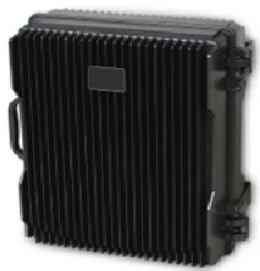
HAG-08-33 Dual-Band High-Power Booster
33–43 dBm dual-band booster covering up to 30,000 m².
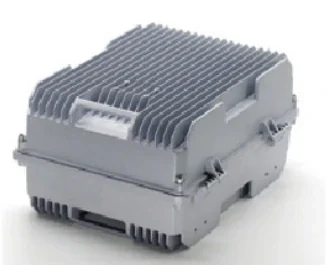
HAG-D5-37 Long-Range Dual-Band Booster
37–43 dBm dual-band booster covering 3,000–15,000 m².
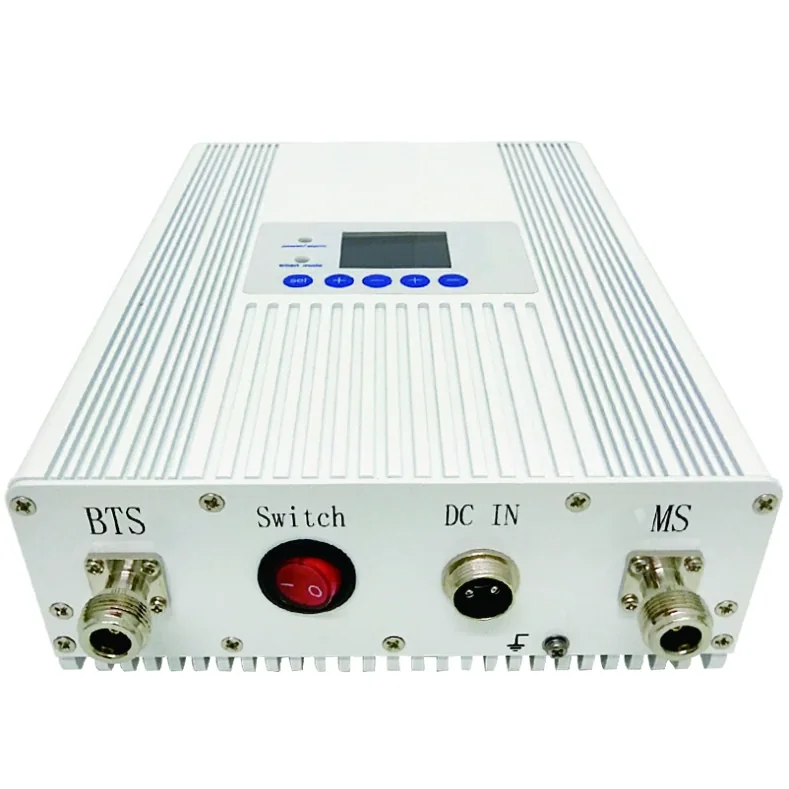
AL-30 Multi-Band LCD Signal Booster
Multi-band booster with LCD display, AGC and isolation detection for 100–3,000 m² coverage.
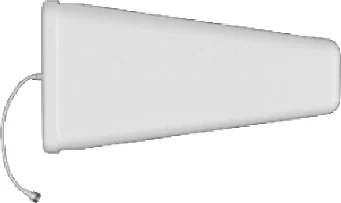
Outdoor Directional Panel Antenna
7–9 dBi outdoor panel antenna for directional service coverage.
View Details