
Distributed Antenna System (DAS)
Passive DAS design for even coverage across large or multi-zone buildings.

Application Overview
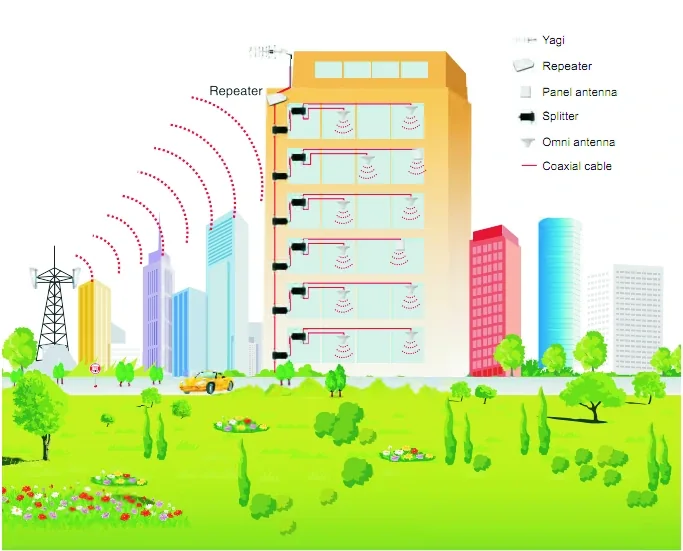
A distributed antenna system takes the signal from one or more boosters and distributes it through splitters, coaxial cable and service antennas, so large or multi-zone buildings get even coverage instead of one strong spot near the host. Passive DAS is the practical choice when the building has a usable outdoor donor and the cable runs are within budget. We design by zone, confirm antenna counts and produce a system diagram for installation and acceptance.
Typical Installation Layout
A typical installation uses an outdoor donor antenna, a booster or fiber repeater, a distribution network and indoor service antennas.
- 1
Measure the outdoor donor level and map the zones, walls and cable routes.
- 2
Define the head-end, splitter levels and antenna count per zone; check isolation between donor and service antennas.
- 3
Install, label and test each zone; record gain, output power and coverage results for acceptance.
Installation notes
- Keep the donor antenna and service antennas separated by distance and building structure; do not rely on gain alone.
- Balance splitter levels so near and far zones receive similar power; avoid over-driving one branch.
- Label cables, splitters and test points; keep a test record for each zone.
Recommended Signal Booster Solutions
The models below are a starting point. The final Bill of Materials is confirmed after a site survey.
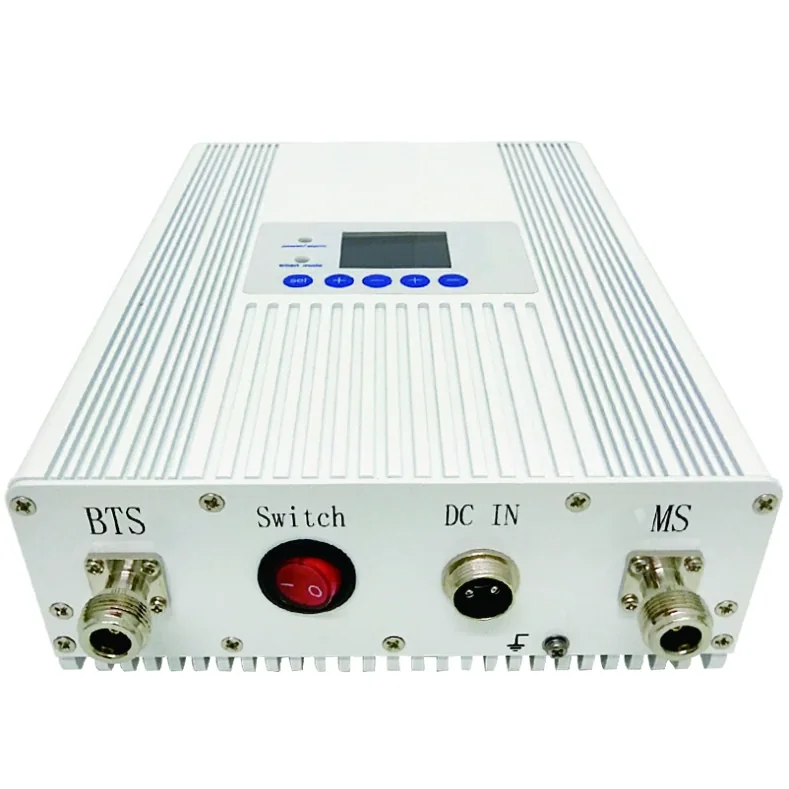
AL-30 Multi-Band LCD Signal Booster
Multi-band booster with LCD display, AGC and isolation detection for 100–3,000 m² coverage.
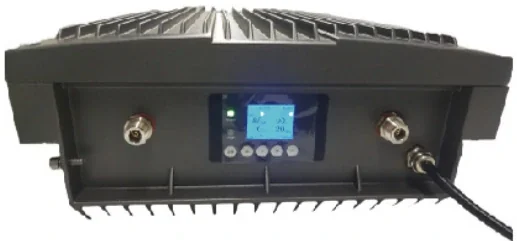
HAG-33DB3P Tri-Band Booster
Tri-band 33 dBm booster for multi-operator coverage.
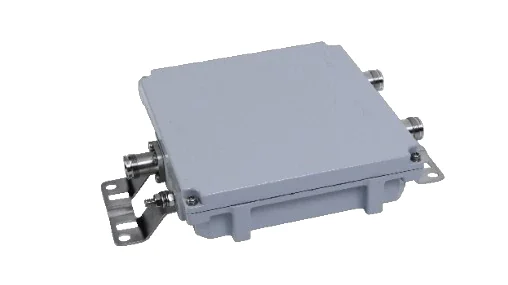
Cavity Combiner
2-in / 1-out cavity combiner for 800–2700 MHz systems.
View Details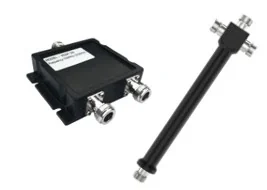
Cavity Power Splitter
Cavity power splitters for 800–2700 MHz distributed antenna systems.
View Details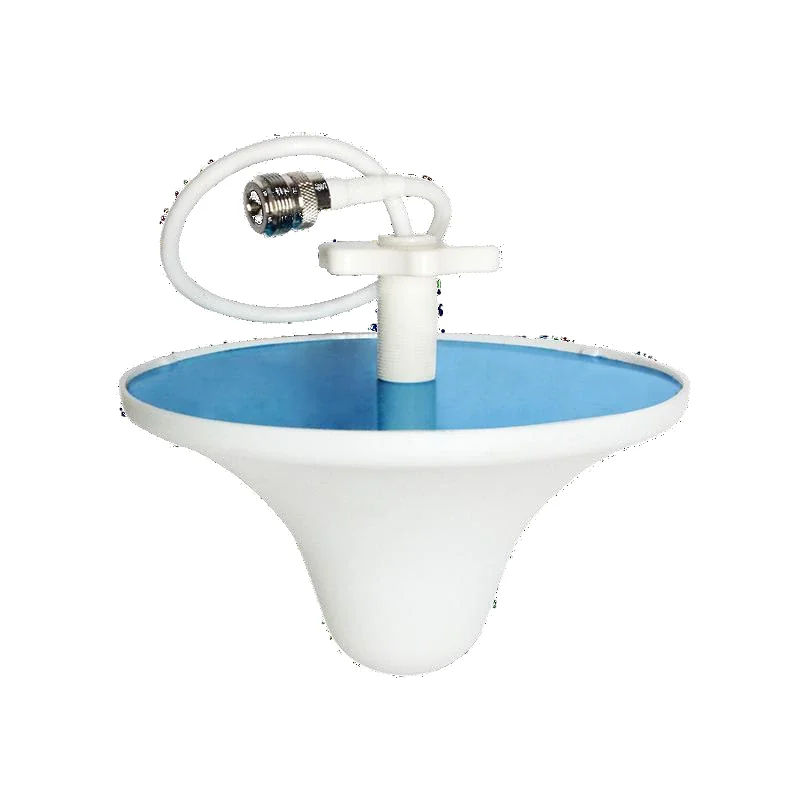
Indoor Omnidirectional Ceiling Antenna
3 dBi omnidirectional ceiling antenna for 800–2700 MHz.
View Details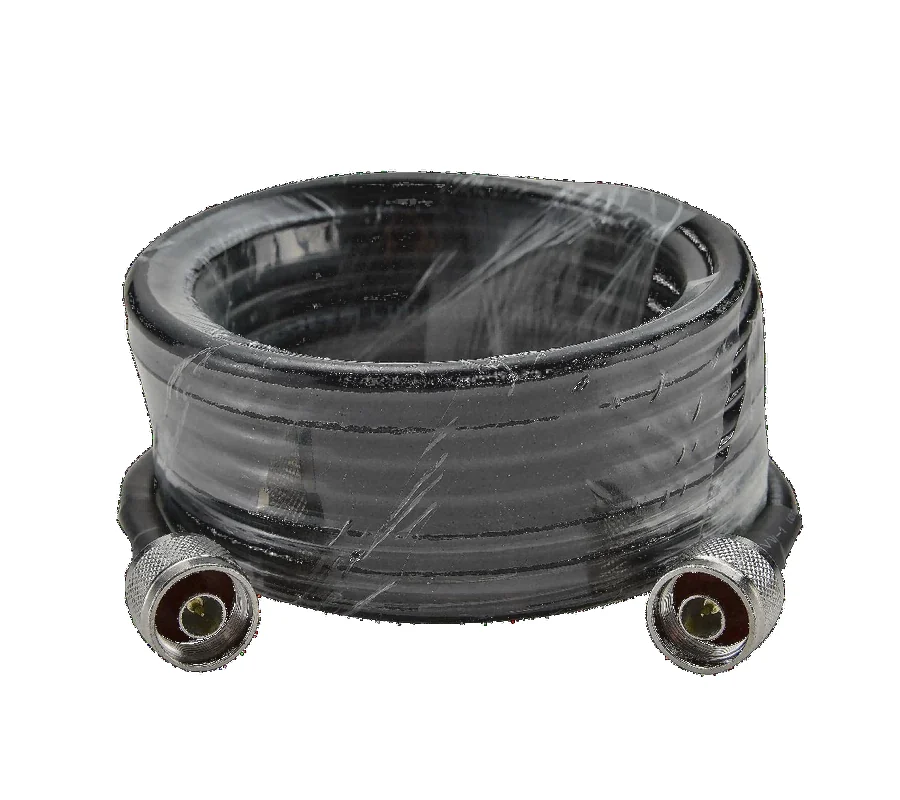
Low-Loss Coaxial Cable
Low-loss 50-5 and 1/2" coaxial cable with N male connectors.
View DetailsRequest a Solution
Share your floor plan, coverage area and target bands. Our engineering team will propose a practical configuration.
- sale@cellphonenetworkbooster.com
- Mon – Fri, 9:00 – 18:00 (GMT+8)
Helpful with your enquiry
- Floor plan or site photos
- Area, floors and ceiling height
- Target bands and operators
Frequently Asked Questions
What is the difference between passive DAS and active DAS?
Passive DAS distributes RF over coaxial cable and splitters, with no active remote units. Active DAS converts the signal to fiber or Ethernet and uses powered remote units. We focus on passive DAS; when a project needs hybrid or active DAS, we support the RF and equipment interface with partners.
How many service antennas does a DAS need?
It depends on floor area, partition walls and target level. As a planning range, one service antenna per 100–200 m² in open office areas is common; partitioned rooms, warehouses and long corridors need more. The final count is confirmed after a site survey and system design.
Can one DAS support multiple operators and bands?
Yes, if the host, combiners and antennas cover the required bands. Send the destination country, operators and bands; we will confirm the band combination and whether a combiner or multi-band host is needed.
Do you provide drawings and commissioning support?
We provide the system diagram, equipment list, antenna layout and test points. Installation is carried out by the customer or a local contractor; we support remote commissioning and acceptance checks.