
Fiber Optic DAS
Fiber-fed coverage for long cable runs and separated buildings.

Application Overview
When the head-end and the coverage area are far apart, fiber-fed remote units avoid the loss and bulk of long coaxial runs. We supply fiber repeaters and remote units, design the head-end and remote layout, and support remote commissioning. Fiber splicing, path and power at each remote point are coordinated with the local contractor.
Typical Installation Layout
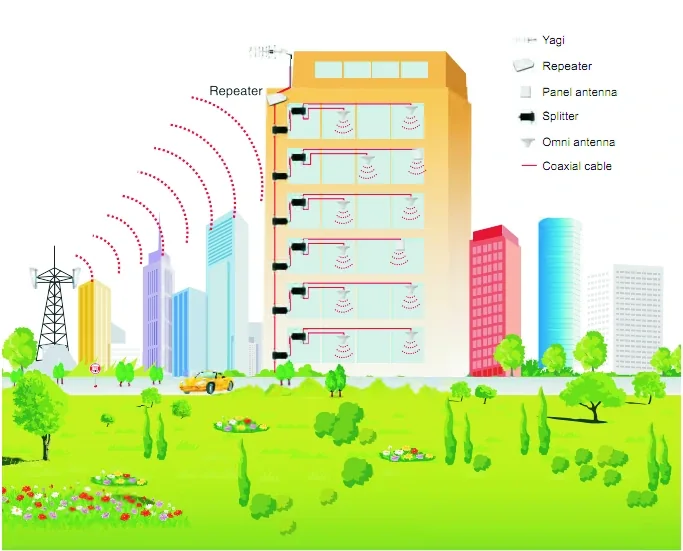
A typical installation uses an outdoor donor antenna, a booster or fiber repeater, a distribution network and indoor service antennas.
- 1
Confirm the distance, fiber path and power at each remote point.
- 2
Define the head-end, remote units and service antennas per zone.
- 3
Install fiber and remotes with the local contractor; test each remote and zone remotely.
Installation notes
- Use fiber when coax loss or routing makes passive DAS impractical, not simply because the building is large.
- Agree who provides fiber, splicing, conduits and power before quoting.
- Label each remote and fiber pair; keep a port map for future service.
Recommended Signal Booster Solutions
The models below are a starting point. The final Bill of Materials is confirmed after a site survey.
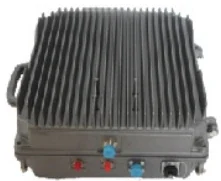
HAG-P5-37DBG Five-Band Fiber Repeater (Direct Coupling)
Five-band direct-coupled fiber system for tunnels and long-distance coverage.
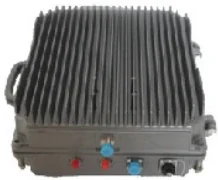
HAG-P5-37DB Five-Band Fiber Repeater
Five-band fiber repeater with 90–95 dB gain for tunnels and large sites.
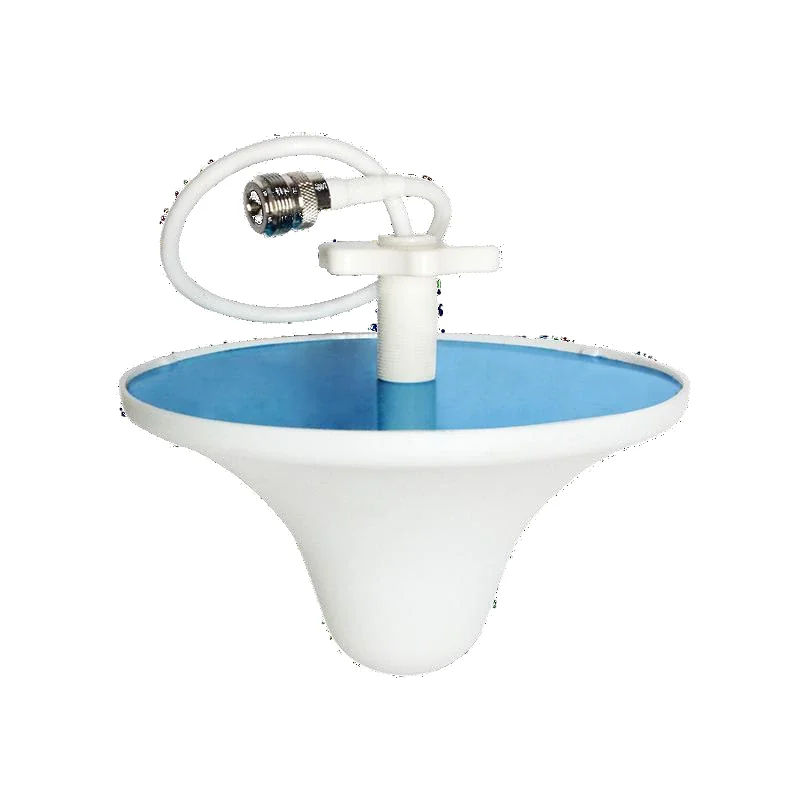
Indoor Omnidirectional Ceiling Antenna
3 dBi omnidirectional ceiling antenna for 800–2700 MHz.
View Details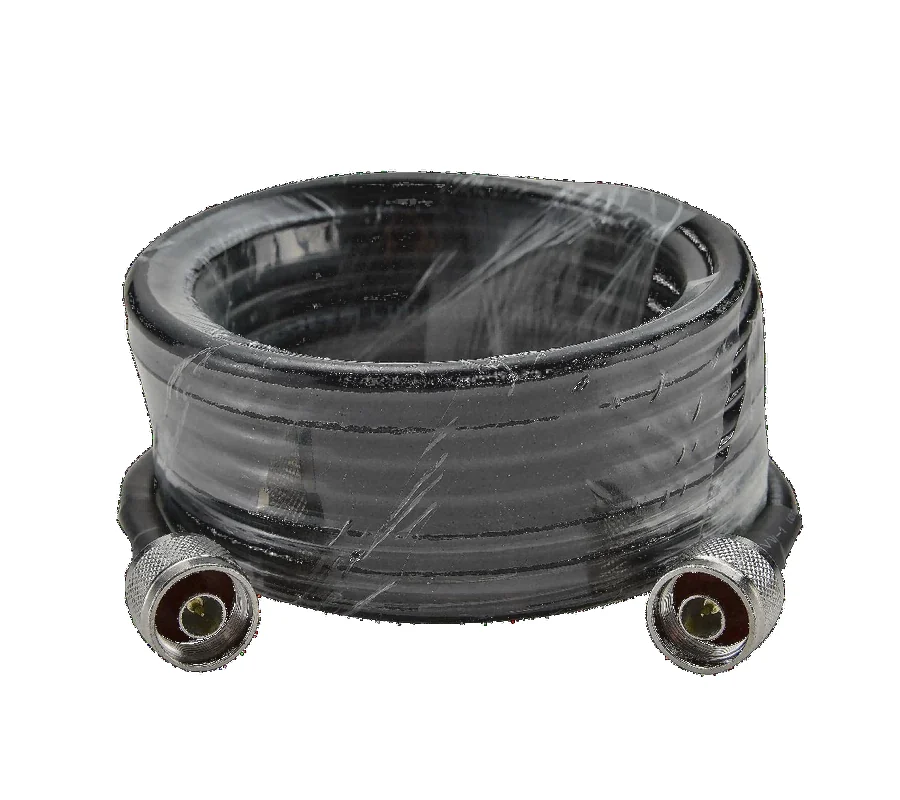
Low-Loss Coaxial Cable
Low-loss 50-5 and 1/2" coaxial cable with N male connectors.
View DetailsRequest a Solution
Share your floor plan, coverage area and target bands. Our engineering team will propose a practical configuration.
- sale@cellphonenetworkbooster.com
- Mon – Fri, 9:00 – 18:00 (GMT+8)
Helpful with your enquiry
- Floor plan or site photos
- Area, floors and ceiling height
- Target bands and operators
Frequently Asked Questions
When should I choose fiber instead of coax?
Choose fiber when the head-end and coverage area are far apart, when coax loss would be too high, or when the route crosses separate buildings. For short runs within one building, passive coax DAS is usually simpler and lower cost.
Do you supply the fiber and splicing?
We supply the fiber repeater and remote units. Fiber cable, conduits, splicing and power are normally provided by the local contractor; we confirm the interface and test the optical link with you.
Can one head-end serve several buildings?
Yes, if the optical budget and remote count are within the system limits. Each building needs its own remote units and power; the design confirms the optical split and distance.