
In-Building Cellular Coverage
Design-led indoor coverage for offices, hotels, warehouses and public buildings.

Application Overview
In-building cellular coverage is the result of three variables: the outdoor macro signal, the building penetration loss and the system gain. We measure the outdoor level, review the building materials and layout, then specify a booster or passive DAS configuration with the antenna count and cable route. Projects that need a design before equipment selection start with a site survey, a zone plan and a confirmed target level.
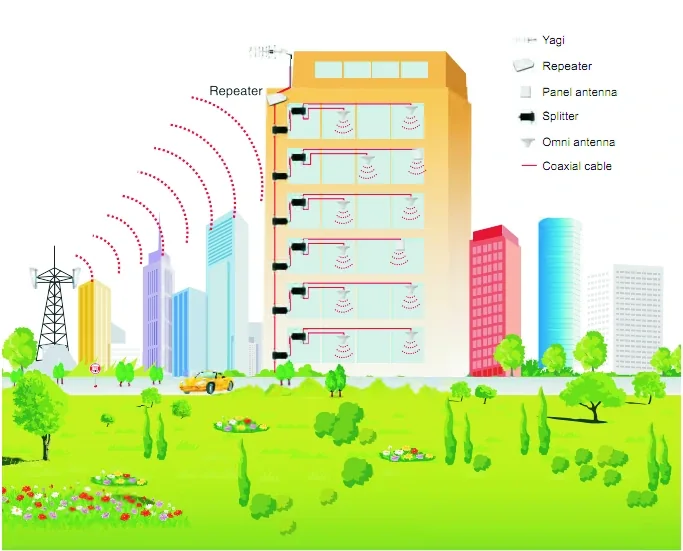
Typical Installation Layout
A typical installation uses an outdoor donor antenna, a booster or fiber repeater, a distribution network and indoor service antennas.
- 1
Record outdoor RSRP/SINR around the building and indoor levels in representative rooms.
- 2
Map floors, walls and user density; define target levels and zones.
- 3
Select host, antennas and cable; install and verify each zone against the target.
Installation notes
- As a rule of thumb, -85 dBm is good, -100 dBm is the voice limit and below -110 dBm is effectively a dead zone; confirm on site.
- Do not promise uniform coverage before reviewing the floor plan and wall materials.
- Confirm the target bands and operator requirements before ordering.
Recommended Signal Booster Solutions
The models below are a starting point. The final Bill of Materials is confirmed after a site survey.
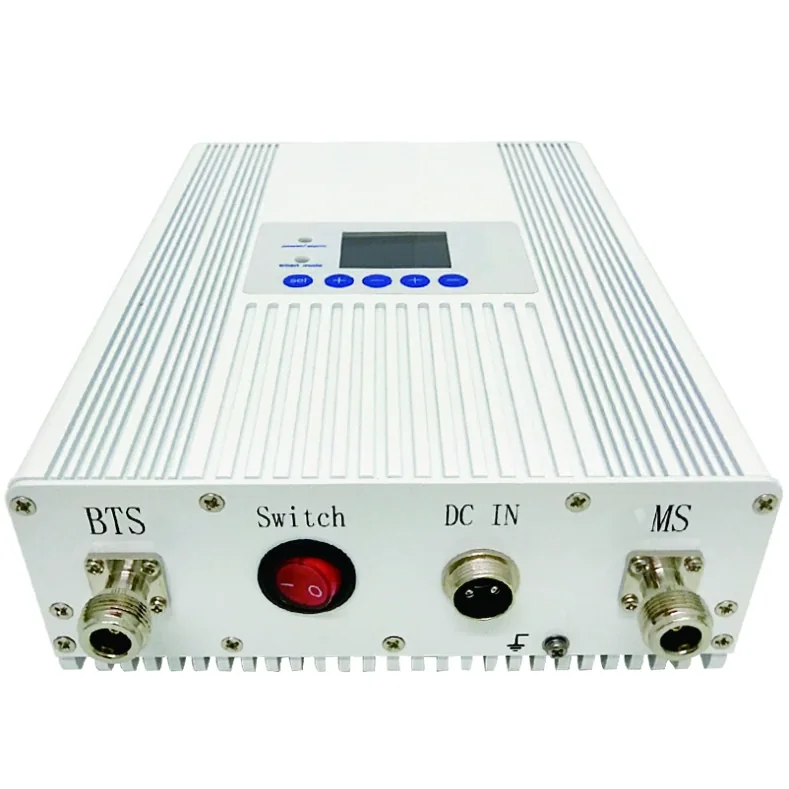
AL-30 Multi-Band LCD Signal Booster
Multi-band booster with LCD display, AGC and isolation detection for 100–3,000 m² coverage.
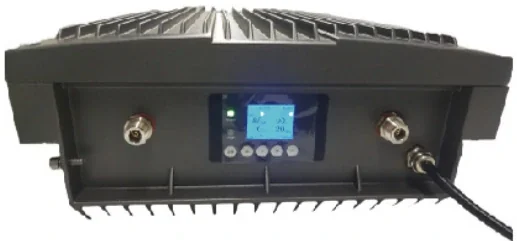
HAG-33DB3P Tri-Band Booster
Tri-band 33 dBm booster for multi-operator coverage.
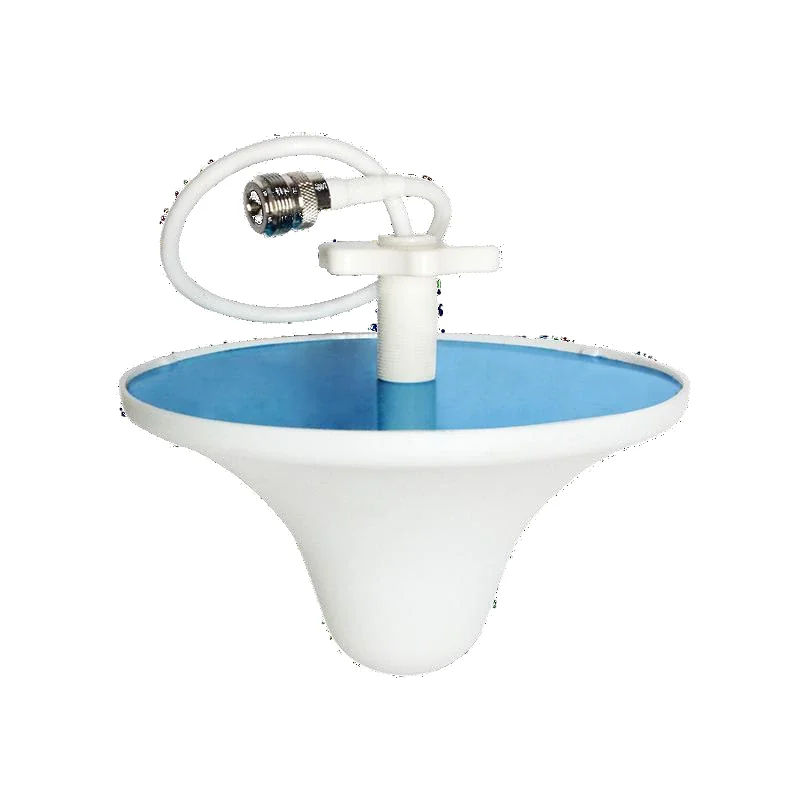
Indoor Omnidirectional Ceiling Antenna
3 dBi omnidirectional ceiling antenna for 800–2700 MHz.
View Details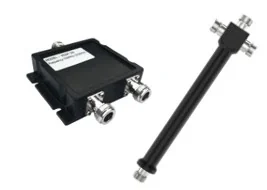
Cavity Power Splitter
Cavity power splitters for 800–2700 MHz distributed antenna systems.
View DetailsRequest a Solution
Share your floor plan, coverage area and target bands. Our engineering team will propose a practical configuration.
- sale@cellphonenetworkbooster.com
- Mon – Fri, 9:00 – 18:00 (GMT+8)
Helpful with your enquiry
- Floor plan or site photos
- Area, floors and ceiling height
- Target bands and operators
Frequently Asked Questions
What indoor signal level is usable?
For voice, about -100 dBm is the lower limit; -85 dBm or better is comfortable. For data, SINR and band width matter as much as RSRP. Record both RSRP and SINR during the survey.
Can one booster cover a multi-floor office?
Often yes, but the antenna count and splitter design matter more than the host alone. A single host with several service antennas can cover multiple floors if the cable routes and isolation allow it.
Do you design for a specific target level?
Yes. Provide the target level and the critical areas (lobby, meeting rooms, warehouse aisles, guest rooms). We will design the antenna layout and confirm the expected performance after a site survey.