
Tunnels & Infrastructure
Continuous coverage along tunnels and transport corridors.
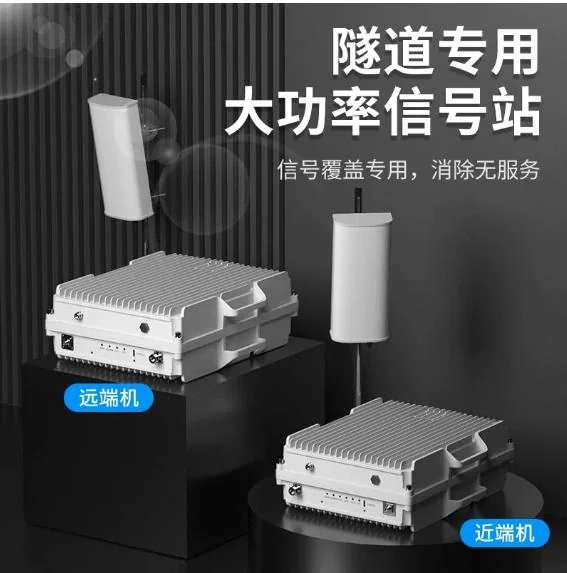
Application Overview
Tunnels and underground corridors require coverage over long distances where coaxial loss becomes impractical. Fiber repeaters with remote units and directional antennas are the standard approach, distributing signal along the tunnel while keeping the donor link stable.
Typical Installation Layout
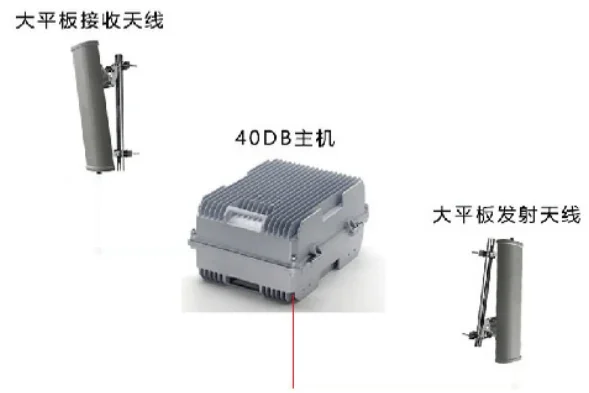
A typical installation uses an outdoor donor antenna, a booster or fiber repeater, a distribution network and indoor service antennas.
- 1
Establish a donor signal at the tunnel entrance or via a dedicated base station connection.
- 2
Use a fiber near-end unit and remote units along the tunnel to avoid coaxial loss.
- 3
Install directional panel antennas to cover each tunnel section.
Installation notes
- Plan remote unit spacing according to fiber budget and antenna coverage.
- Use ruggedized, weatherproof enclosures and connectors.
- Coordinate with tunnel operators for power, mounting and safety approvals.
Recommended Signal Booster Solutions
The models below are a starting point. The final Bill of Materials is confirmed after a site survey.
HAG-P5-37DB Five-Band Fiber Repeater
Five-band fiber repeater with 90–95 dB gain for tunnels and large sites.
HAG-P5-37DBG Five-Band Fiber Repeater (Direct Coupling)
Five-band direct-coupled fiber system for tunnels and long-distance coverage.
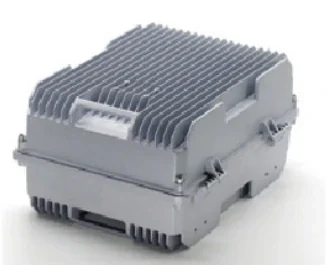
HAG-D5-37 Long-Range Dual-Band Booster
37–43 dBm dual-band booster covering 3,000–15,000 m².
Request a Solution
Share your floor plan, coverage area and target bands. Our engineering team will propose a practical configuration.
- sale@cellphonenetworkbooster.com
- Mon – Fri, 9:00 – 18:00 (GMT+8)
Helpful with your enquiry
- Floor plan or site photos
- Area, floors and ceiling height
- Target bands and operators
Frequently Asked Questions
Why use fiber instead of coaxial cable in tunnels?
Fiber has much lower loss over long distances, so the signal remains stable across kilometres of tunnel. It also simplifies power and equipment placement.
How many remote units are needed?
It depends on tunnel length, fiber loss budget and antenna coverage. A typical design uses remote units at intervals along the tunnel, confirmed by an RF design.
Can the system support multiple operators?
Yes. Five-band fiber repeaters can support multiple operators and technologies, subject to the frequency configuration and local approvals.
Do you provide project design support?
We can review tunnel length, donor conditions and coverage requirements, and propose a near-end/remote unit layout for the project.