
Hotel and Resort Cell Signal: Why Guests Lose Coverage and How to Fix It
A practical coverage guide for hotels and resorts: guest-room antenna counts, coated glass, remote-site donor design, phased installation and budget scope.
On this page
Guests rarely complain about the absence of a DAS. They complain that the call dropped in the room, that mobile payment failed at the bar, or that the airport transfer could not reach the front desk. In a hotel, mobile coverage is part of the service experience, and the cost of a dead zone is paid in reviews and repeat bookings.
The good news is that hotels are usually well understood coverage projects. The building has defined zones, the guest rooms are repetitive, and the back-of-house areas are known. The difficult part is designing for the building you actually have, not for a generic floor plan.
Why do hotels lose mobile coverage even in cities?
A city hotel can sit in a strong outdoor field and still have poor indoor coverage. The usual causes are the same as in any commercial building, with a few hospitality-specific twists.
- Coated glass and modern facades. Low-E glass can add 20-30 dB of loss. Rooms facing the atrium or an internal courtyard may have no direct path at all.
- Concrete cores and bathroom pods. A room may be close to the facade but still separated from it by a bathroom, a service shaft or a concrete wall.
- Long corridors and multiple wings. A single antenna at the end of a corridor will not cover rooms behind two or three walls.
- Basements, spas, gyms and plant areas. These areas often have no usable outdoor path.
- Elevators and stairwells. Metal cars and concrete shafts are effective shields.
- Remote resorts. The problem may be a weak outdoor network rather than a shielded building, especially at the edge of a town or in a dispersed resort layout.
The first diagnostic step is the same as for any building: compare outdoor and indoor RSRP. If the outdoor level is strong and the rooms are poor, the building is the issue. If the outdoor level is also weak, the project needs a donor-link design before any room antennas are discussed.
Which areas matter most to guests?
Coverage priority is not the same as floor area. A small dead spot at the front desk or in the lift can generate more complaints than a large meeting room that is used twice a month.
| Area | Guest impact | Design note |
|---|---|---|
| Lobby and reception | First impression, check-in, payment | High visibility; cover seating and desk positions |
| Guest rooms | Calls, streaming, work | Cover the room, not only the corridor |
| Corridors | Continuity when walking | Avoid call drops between room and lift |
| Elevators and lift lobbies | Safety and convenience | Dedicated antenna or branch; test the car |
| Restaurant, bar and pool | Social and payment | Consider outdoor and semi-outdoor areas |
| Conference and event space | Business use and capacity | Check user density, not only signal strength |
| Back-of-house and service corridors | Operations and staff safety | Often neglected; include in the survey |
| Basement, spa and gym | Guest amenities | Concrete plus earth; plan a separate branch |
A useful exercise is to walk the guest journey from the car park to the room and mark where a call would drop. That map usually identifies the real priorities better than a generic area list.
How many antennas does a hotel need?
Antenna count is driven by wall construction, room layout, ceiling height and the target signal level. The numbers below are planning starting points, not a final design.
| Zone | Starting density | Notes |
|---|---|---|
| Guest rooms via corridor | 1 antenna per 4-6 rooms | Denser for suites, bathroom pods or concrete walls |
| Guest rooms via in-room antenna | 1 per 2-4 rooms | More cabling and access; better for difficult layouts |
| Lobby and public areas | 1 per 150-250 m² | Adjust for double-height spaces and glass walls |
| Restaurants and bars | 1 per 100-200 m² | Consider terrace and kitchen separation |
| Conference rooms | 1 per 100-200 m² | Capacity and ceiling height matter |
| Corridors | 1 per 25-40 m | Directional or ceiling antennas depending on layout |
| Elevators | 1 antenna per car or shaft | Dedicated antenna; test with doors closed |
| Basement and plant | 1 per 200-400 m² | Confirm with a walk test; walls and equipment vary |
A 120-room hotel might start with 20-30 room-facing antennas plus public-area and back-of-house coverage. The exact count should come from a floor plan and a walk test, not from a rule of thumb. The cost difference between a careful layout and a sparse one is small compared with the cost of opening ceilings twice.
Is the problem coverage or capacity?
A hotel can show two bars in every room and still fail at breakfast. Coverage and capacity are different problems, and they need different answers.
| Symptom | Likely cause | Design response |
|---|---|---|
| Calls fail in some rooms but work near the window | Coverage | Add service antennas or move the donor position |
| Data stalls when the conference ends | Capacity | Operator coordination, additional sectors or a capacity layer |
| Signal is present but card terminals time out | Uplink quality or capacity | Check uplink, sector load and terminal behaviour |
| Everyone has bars but calls drop in the lift | Local shielding | Dedicated lift antenna or branch |
A coverage repeater makes the indoor link stronger; it does not add network capacity. If the hotel hosts large events or hundreds of guests stream video at the same time, the serving sector may be congested even when the indoor signal is good. Ask the operator for sector load data before promising that a booster will fix the problem, and test at peak time rather than during a quiet morning. A larger amplifier is not the answer to congestion.
How do you cover a remote resort with weak outdoor signal?
A remote resort can have a beautiful view and a very weak mobile signal. The design question is whether the site has a usable donor sector and a practical path to it.
Start with a survey at several points: the roof of the main building, the highest point on the site, the beach or lakeside, and the service area. A resort often has one side with a clear path over water or open terrain and another side blocked by a hill or dense vegetation. The best donor position may be a small mast away from the main building rather than the roof.
If the outdoor level is workable, use a high-gain directional donor antenna, a short low-loss feeder and a host sized for the distribution network. If the distance between the donor point and the guest buildings is long, a fiber repeater with remote units may be cheaper than a long coaxial backbone.
If the outdoor level is not workable, be honest about the alternatives: a VoIP service over the resort’s broadband, satellite backhaul with indoor Wi-Fi, or a private LTE network for staff operations. A repeater cannot manufacture coverage where no usable signal exists.
How do you install without disturbing guests?
Installation planning matters as much as the RF design. A hotel is a live operation, and guests notice noise, ceiling tiles and cable routes.
- Phase the work. Start with the lobby, the worst floor and the back-of-house, then extend wing by wing.
- Use service corridors and risers. Route cable away from guest corridors and public areas where possible.
- Agree access windows. Low-occupancy periods and night shifts reduce disruption; confirm the rules with the hotel manager.
- Build a mock-up room. Install one room first, test it and get approval before repeating the design.
- Protect finishes. Use cable trays, trunking and fire-rated penetrations; photograph the route before closing ceilings.
- Commission with the hotel team. Test rooms, lifts, lobby, restaurant and back-of-house, and record the results.
A phased installation also gives the hotel a chance to verify the business case. If the first wing reduces complaints and improves guest feedback, the next phase is easier to approve.
What should a hotel owner include in the budget?
A complete budget has more lines than the booster and antennas. Ask for a breakdown that includes:
- Survey and design — floor plans, RF design, antenna positions and cable routes.
- Equipment — host, donor antenna, service antennas, splitters, couplers, cable and connectors.
- Installation — labor, access equipment, cable routing, fire stopping and making good.
- Commissioning — walk tests, before-and-after readings and a handover report.
- Spare parts and training — at least one spare host or critical module if the hotel cannot tolerate downtime.
- Maintenance — annual connector and antenna checks, alarm monitoring and support terms.
Be cautious with a quotation that lists only equipment. The installation and commissioning are where most of the project risk sits, especially in an operating hotel. A clear scope also protects the hotel from change orders later.
What should you measure before requesting a quote?
Collect the same core data as for any commercial project, plus hotel-specific details:
- Outdoor RSRP at the roof and at two or three facades.
- Indoor RSRP in three to five guest rooms, including a low floor and a room away from the facade.
- Readings in the lobby, restaurant, conference area, lift car and basement.
- Floor plans with room numbers, floor count and service riser locations.
- Photos of the facade, roof, equipment room and a typical guest room ceiling.
- The operators and bands guests actually use.
If the hotel has a recent renovation, note the window and facade materials. A new coated-glass facade can explain a sudden drop in coverage that has nothing to do with the operator. The materials guide and the measurement guide explain how to capture those details.
The best next step is a short remote review: send the readings, the plans and the photos. A supplier should be able to say whether the hotel needs a building-shielding design, a donor-link design or a phased approach, and which areas should be covered first.
Frequently asked questions
Will a cellular booster interfere with the hotel Wi-Fi?
A correctly installed booster operates on licensed mobile bands and should not interfere with Wi-Fi, which uses unlicensed 2.4 GHz and 5 GHz channels. Keep antennas separated and follow the installation plan, then verify both networks after commissioning.
Do guests need to install an app or change settings?
No. A properly designed indoor distribution system is transparent to the guest. The phone connects to the mobile network as usual, and the booster simply makes the indoor signal stronger and cleaner.
Can we cover one wing or one floor first?
Yes. Phased coverage is often the best approach for an operating hotel. Start with the lobby, the worst guest floors and the back-of-house areas, then extend after the first phase is verified.
How long does a hotel installation take?
The schedule depends on room count, construction type and access rules. Many hotel projects are installed in phases during low-occupancy periods or night shifts. The exact plan should be agreed after a site survey and a mock-up room test.
Is 5G coverage necessary for a hotel?
It depends on the networks guests use. Confirm the bands deployed in the area and choose a system that covers the bands that matter. A system that supports the local 4G layers may be more useful than a 5G-only label.
What about elevators and basement areas?
Elevators, stairwells, basements and plant rooms usually need dedicated antennas or a separate branch. They should be included in the survey because they are often the first places where guests and staff notice a missing signal.
Related products
See All Products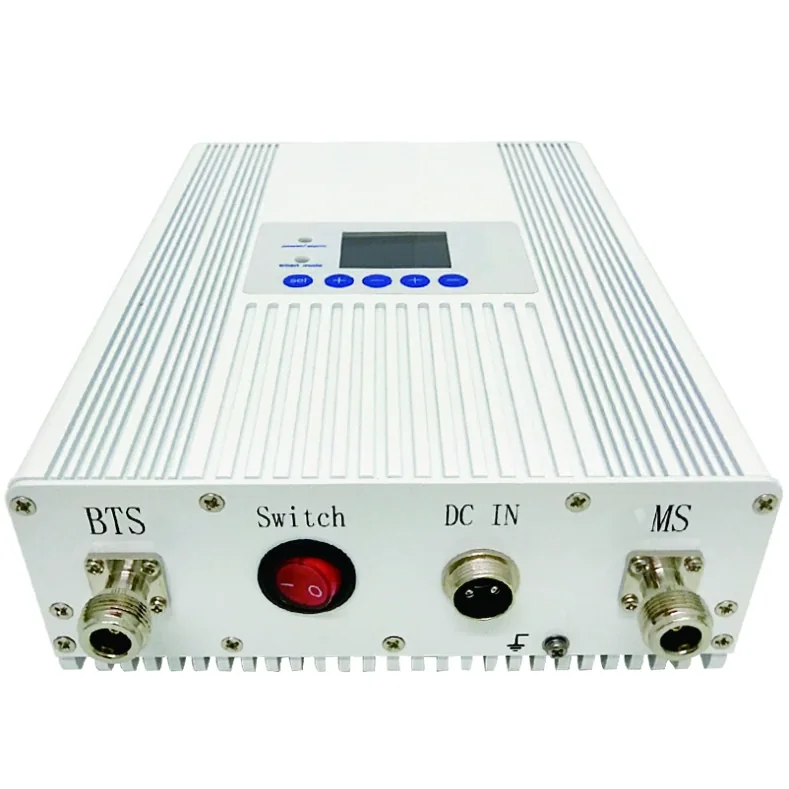
AL-30 Multi-Band LCD Signal Booster
Multi-band booster with LCD display, AGC and isolation detection for 100–3,000 m² coverage.
HAG-08-33 Dual-Band High-Power Booster
33–43 dBm dual-band booster covering up to 30,000 m².
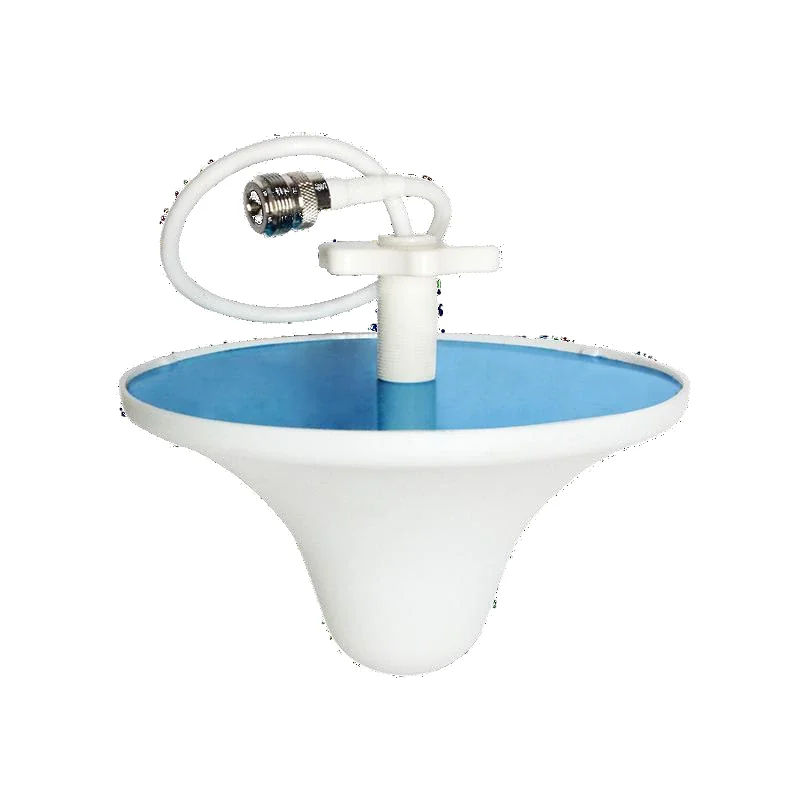
Indoor Omnidirectional Ceiling Antenna
3 dBi omnidirectional ceiling antenna for 800–2700 MHz.
View Details
Indoor Wall-Mounted Panel Antenna
7–9 dBi wall-mounted panel antenna for 800–2700 MHz.
View Details