
Weak Outdoor Signal? How to Design a Long-Distance Donor Antenna System
When outdoor RSRP is -95 to -110 dBm, the project is a donor-link design: antenna gain, mast height, cable loss and realistic indoor expectations.
On this page
A weak outdoor signal is a different problem from a shielded building. In a shielded building, the network is present outside and the walls remove it. At a weak-signal site, the network itself is marginal before the building is even involved. A larger indoor amplifier cannot fix that, because there is no strong signal at the donor port to amplify.
The practical answer is to treat the donor side as its own design project. That means a directional antenna with enough gain, a mounting height with a clear path, a short low-loss cable run and realistic expectations for what the system can deliver indoors.
What is the difference between a weak network and a blocked building?
The distinction comes from two readings: outdoor RSRP at the proposed donor position and indoor RSRP in the affected area. If the outdoor reading is good and the indoor reading is poor, the building is the problem. If both are poor, the donor link is the problem.
| Outdoor RSRP | Indoor RSRP | Diagnosis | First design move |
|---|---|---|---|
| -65 to -85 dBm | Much lower | Building shielding | Indoor distribution antennas |
| -85 to -95 dBm | Low | Building shielding plus marginal donor | Directional donor, low-loss cable, careful antenna count |
| -95 to -110 dBm | Very low | Weak outdoor network | High-gain donor, mast height, short feeder; then host sizing |
| Below -110 dBm or unstable | No service | No usable macro coverage | Alternative technology or operator build-out |
The middle two rows are where most project mistakes happen. A supplier quotes a standard kit, the installer mounts a small donor antenna on the parapet, and the system either underperforms or oscillates. The missing step was not the booster; it was the donor link.
How much gain does a high-gain donor antenna add?
Antenna gain is a measure of how much the antenna concentrates energy in a direction, not how much it creates. A directional antenna can add 10-20 dB compared with a small omni antenna, but only in its main beam and only if it is aimed correctly.
| Antenna type | Typical gain | Beamwidth | Best use |
|---|---|---|---|
| Small omni donor | 2-5 dBi | Wide | Strong signal in all directions; short cable run |
| Log-periodic directional | 9-12 dBi | Moderate | General weak-signal sites with one dominant sector |
| Outdoor panel | 10-15 dBi | Moderate to narrow | Building facade with a known sector direction |
| Grid or parabolic | 15-20 dBi | Narrow | Long-distance, clear line-of-sight donor links |
Higher gain comes with a narrower beam. A 20 dBi grid antenna pointed at the wrong sector can perform worse than a 10 dBi log-periodic pointed correctly. Aiming is part of the gain.
Use the cell ID and band you recorded during the survey. If the phone locks onto a weak sector while a stronger neighbour exists, rotating the donor antenna by 20-30 degrees can change the result. Record the reading at each heading instead of guessing.
How high should the donor antenna be mounted?
Height helps because it improves the chance of a clear path over roofs, trees, hills and metal structures. It does not add gain by itself, and the improvement is not linear. A 5 m increase at a site with a blocked path can matter more than a 20 m increase at a site that already has line of sight.
As a planning guide:
| Situation | Typical mounting approach |
|---|---|
| Roof with a clear view | Roof edge or short mast, 2-5 m above the parapet |
| Roof blocked by a taller building | Move to the opposite facade or raise 5-10 m |
| Trees or low obstacles | Raise above the canopy or move to a clear side |
| Flat rural site with a distant tower | Mast or tower height that clears the terrain; 10-30 m may be needed |
| Metal warehouse | Mount outside the metal envelope, not inside the roof space |
Every mast needs mechanical design, grounding and lightning protection. In many countries a tall structure also needs permission. Height is a civil and safety decision as much as an RF decision; do not let a coverage conversation skip it.
How do you aim and secure the donor antenna?
Aim with data, not with a compass bearing alone. Start with the serving cell ID and band you recorded during the survey, point the antenna roughly toward that sector, then rotate it in 10-20 degree steps. At each step, wait for the phone or app to update and record RSRP and SINR. Choose the heading with the best combination of the two, not the highest RSRP alone; a slightly weaker but cleaner signal often delivers better data.
Lock the mount, mark the final heading on the mast or bracket, and re-check the reading after tightening. On a narrow-beam antenna, a few degrees can cost several dB. Weatherproof every outdoor connector, ground the mast and antenna, leave a service loop in the cable and photograph the final installation for the handover file. If the signal changes later, the marked heading and the recorded values make it possible to tell whether the antenna moved or the network changed.
How much signal do you lose in coaxial cable?
Cable loss is the quiet reason a weak-signal design fails. The donor antenna may add 15 dB, then 80 m of thin cable removes 10 dB before the host sees the signal. The same money spent on a shorter route or a larger cable often produces more usable output than a higher-gain antenna.
Typical insertion loss for foam-dielectric coaxial cable at mobile frequencies:
| Cable size | 900 MHz | 1800 MHz | 2100 MHz | 2600 MHz |
|---|---|---|---|---|
| 1/2 inch | 4-5 dB / 100 m | 6-7 dB / 100 m | 7-8 dB / 100 m | 8-9 dB / 100 m |
| 7/8 inch | 2-3 dB / 100 m | 3-4 dB / 100 m | 4-5 dB / 100 m | 4-5 dB / 100 m |
These are planning ranges; the actual figure depends on the cable, connectors and installation. Add connector loss and any splitter loss. A 30 m run of 1/2 inch cable at 2100 MHz might cost about 2.5 dB, which is acceptable. A 100 m run costs about 8 dB, which can erase the benefit of a larger antenna.
Keep the donor cable as short as the site allows. Put the host near the donor entry point, then distribute indoors on the service side where cable runs can be shorter and losses are easier to manage.
When should you use a fiber repeater instead?
A fiber repeater becomes attractive when the distance between the donor point and the coverage area is too long for coaxial cable, or when the site is split into buildings or zones that cannot share one coaxial backbone.
Typical cases include:
- A donor point on a hill or roof far from the building being covered.
- Multiple buildings on a campus where each needs a remote unit.
- A tunnel, basement or plant area where the coaxial route is long and lossy.
- A site where the donor and service antennas cannot achieve enough isolation in one enclosure.
A fiber host converts the RF signal to light, sends it over fiber and converts it back at a remote unit near the service antennas. The loss over hundreds of metres of fiber is low compared with coaxial cable, and the remote unit can be placed where the antennas are needed.
Fiber is not automatically better. It adds cost, needs power at the remote end and requires a fiber route. Use it when the coaxial alternative is technically or economically worse, not as a default upgrade.
What results are realistic at -95 to -110 dBm?
Consider a site with an outdoor reading of -100 dBm at the proposed donor position on 2100 MHz. A 12 dBi log-periodic antenna and a 30 m run of 1/2 inch cable produce:
| Stage | Value |
|---|---|
| Outdoor RSRP at donor | -100 dBm |
| Donor antenna gain | +12 dB |
| Feeder and connector loss | -3 dB |
| Signal at host input | -91 dBm |
| Host gain (example) | 80 dB |
| Host output before limit | -11 dBm |
| Maximum host output | 37 dBm |
| Actual output | -11 dBm (gain-limited, not power-limited) |
| Service antenna gain | +3 dBi |
| EIRP at service antenna | -8 dBm |
At 20 m in a typical indoor environment, path loss plus a partition might be around 70 dB. The received level would be roughly -78 dBm, which is usable. At 40 m through two walls, it could fall to -95 dBm or lower.
This is why a weak-signal system can work well in a compact area but disappoint in a large building. The host is not delivering its full rated power because the input is low. The fix is more donor signal, not a bigger indoor amplifier.
If the outdoor reading is -110 dBm, the same chain delivers about 10 dB less at the service antenna. The coverage radius shrinks. At that point, a higher mast, a larger antenna, a shorter cable or a fiber remote unit may be necessary; otherwise the honest answer is that the site is at the edge of what a passive system can do.
What should you check before buying a high-gain antenna?
Check four things before spending money on gain:
- Is there a stable serving sector? Record the cell ID and RSRP at several headings. A stable sector is a candidate; a fluctuating set of weak cells is not.
- Is the path clear? Look for hills, buildings, trees and metal roofs between the antenna and the tower. Height and direction matter more than a few dB of gain.
- How long is the cable run? A high-gain antenna connected by a long thin cable can be worse than a moderate antenna with a short thick cable.
- What is the realistic indoor target? A weak donor site will not deliver the same coverage as a strong urban site. Agree on the target rooms and the expected level before ordering.
If you send the outdoor readings, the proposed mounting position and the cable route, a supplier can calculate the donor link and tell you whether the project is viable. If the answer is “we need a taller mast and a fiber remote unit,” that is more useful than a kit that arrives and underperforms.
Frequently asked questions
Can a higher-gain antenna always fix a weak outdoor signal?
No. Gain helps only when the antenna is pointed at a usable serving sector and the cable loss is controlled. If the site is dominated by noise or interference, or if there is no stable sector to receive, a larger antenna will not create coverage.
How far from the tower can a signal booster work?
Distance alone does not determine success. A clear path over 10-20 km can work with a high-gain directional antenna and a good donor level, while a tower 2 km away can be unusable behind a hill or dense buildings. The outdoor RSRP is the deciding measurement.
Do I need a mast or tower at a weak-signal site?
If the roof does not give a usable reading or a clear path, raising the donor antenna by 5-15 m can make a large difference. A mast must be installed safely, grounded and checked for planning permission; it is not a substitute for aiming at the right sector.
Can I connect two boosters in series to get more gain?
Do not. Cascading two amplifiers increases noise, reduces stability and makes isolation much harder. If more output is needed, use a single host with the correct rating and improve the donor link instead.
Will a 5G booster help at a weak-signal site?
Only if the weak signal is on a 5G band the booster supports. In many rural and remote sites the usable layer is LTE, so confirm the band on site before ordering a 5G-specific system.
What if the best outdoor reading is still below -110 dBm?
Treat the site as outside the practical range of a passive repeater. Re-check at a higher point or a different facade, then discuss alternatives such as a higher mast, a fiber-fed remote unit or a different backhaul technology.
Related products
See All Products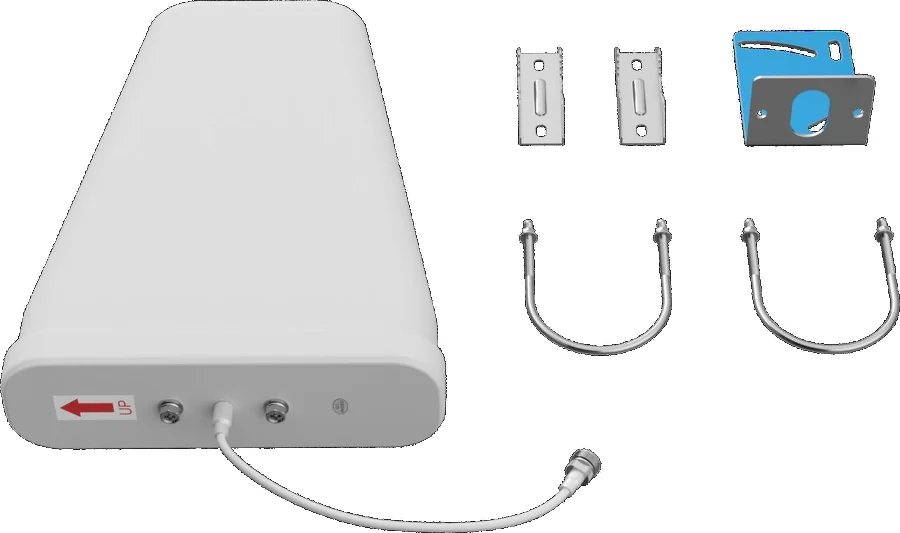
Wideband Log-Periodic Donor Antenna
10 dBi directional outdoor antenna for receiving donor signal.
View Details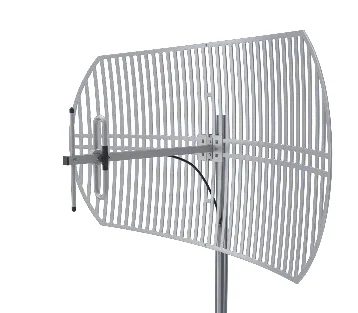
Outdoor Grid Antenna
15–18 dBi grid antenna for 800–2700 MHz outdoor links.
View Details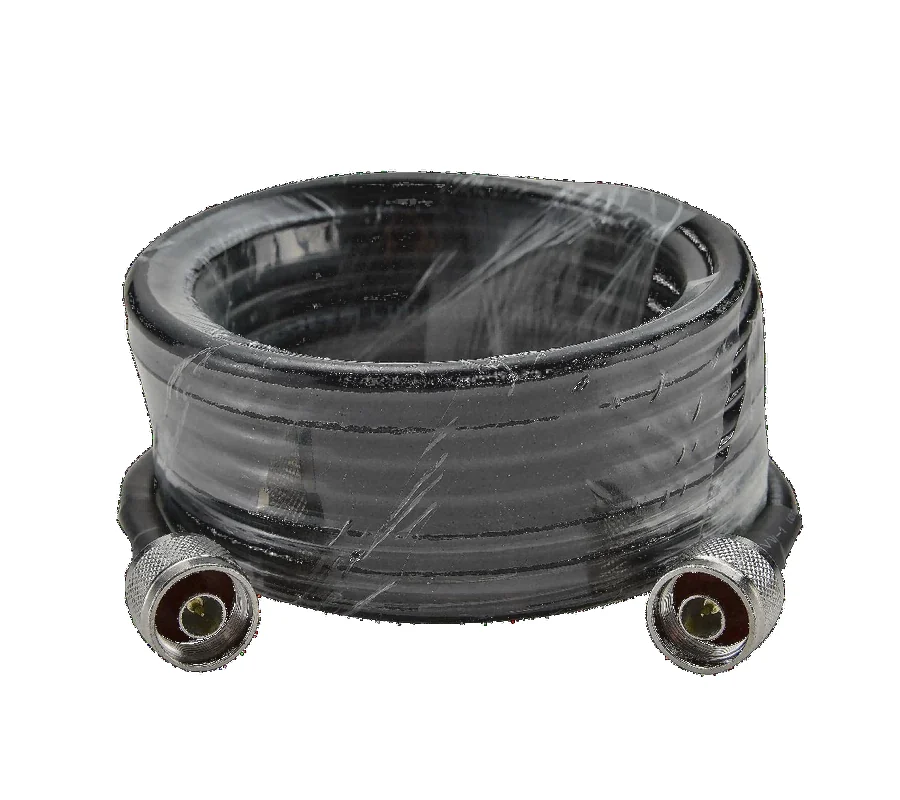
Low-Loss Coaxial Cable
Low-loss 50-5 and 1/2" coaxial cable with N male connectors.
View Details
HAG-P5-37DB Five-Band Fiber Repeater
Five-band fiber repeater with 90–95 dB gain for tunnels and large sites.