
Single, Dual or Tri-Band: Which Signal Booster Fits Your Market?
Compare single-band, dual-band and tri-band signal boosters by band plan, operator count and coverage need, with LTE and 5G band references and a buyer's selection checklist.
On this page
A buyer in a market with three mobile operators often asks for a tri-band booster. The logic sounds reasonable: three networks, three bands. In practice, this assumption causes more wrong orders than almost any other in the product category. Band count describes how many frequency ranges one host can amplify at the same time. It does not describe how many operators, SIM cards or services the site needs.
The useful starting point is the opposite question: which bands are measurable at the donor position, and which carry the traffic? This guide compares the three configurations, explains how to confirm the local band plan, and shows where a fiber repeater fits.
Why does band count not equal operator count?
Most LTE bands are paired ranges of uplink and downlink frequencies; TDD bands such as n78 use the same range in both directions. Operators hold licences to use those ranges, but a band is not owned by one company. In many markets, one operator uses several bands, and different operators may share the same band. A band can also carry different technologies as spectrum is refarmed.
A signal booster does not identify the operator. It filters and amplifies a configured frequency range. If two operators share that range, both pass through the same host. If a third operator uses a different band, it does not. So a dual-band unit can serve three operators in one market and fail with two in another.
The right question is how many bands must be amplified simultaneously, and what are their uplink and downlink ranges. That answer comes from the band plan, not from the number of SIM cards.
When is a single-band booster the right choice?
A single-band host is the honest choice when the donor survey finds one usable band and the business case rests on that band. Typical examples are a rural site where only one operator reaches the roof, a small building where voice is the main requirement, or a cost-sensitive project with a clearly defined network layer.
The advantages are lower cost, simpler filtering, easier commissioning and fewer configuration errors. The limitation is flexibility. If the operator adds a band, refarms the existing one or the site later needs a second network, the single-band host cannot cover it without additional equipment. Examples in this range include the HAG-19-27T, a 37 dBm single-band engineering booster with 75–85 dB gain and a band configured to order from 1900, 2300 or 2600 MHz.
Single-band is a poor choice when the survey shows two bands of comparable strength and both carry traffic. Buying one band because it is cheaper usually leads to a second purchase and a second installation.
When should you choose a dual-band booster?
Dual-band is the most common configuration for residential, office and small commercial projects because it balances cost and coverage. The usual pairing is one low band for reach and one high band for capacity. A dual-band host also works when two operators share those bands, because the booster amplifies spectrum, not brands.
Two products show the range. The HAG-19-37T supports two bands selected from 1900, 1800 and 2600 MHz, delivers 33 dBm and covers roughly 1,000–5,000 m². The HAG-08-33 is a higher-power dual-band engineering unit with two bands from 800, 900, 1800 and 2100 MHz, output options from 33 to 43 dBm and coverage up to 30,000 m².
A dual-band unit is not a tri-band unit with a dormant third channel; the third band is absent. If a third band already carries meaningful traffic, dual-band is the wrong compromise.
When does a tri-band booster make sense?
Tri-band becomes worthwhile when three distinct bands must be live at the same time. Common cases are a commercial building serving multiple operators, a site that needs 2G voice plus two 4G layers, or a project where one host and one equipment room are preferred over two separate systems.
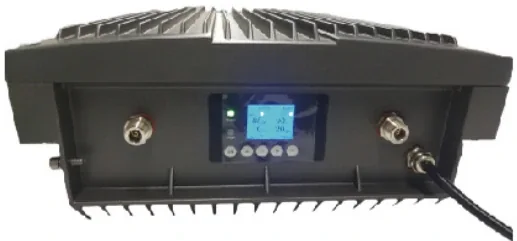
The HAG-33DB3P is an example: three bands selectable from 800, 900, 1800, 2100, 1900 and 2600 MHz, 33 dBm output and 75–85 dB gain. The AL-30 platform supports one to five bands with LCD diagnostics, which helps distributors cover several band plans from one product family.
More bands mean more filtering, insertion loss and a more complex antenna system. Ask for per-band output power rather than a single headline figure, and do not choose tri-band only because it sounds more capable; if two bands carry the traffic, the third adds cost without improving the user experience.
| Configuration | Bands amplified | Best for | Main trade-off | Example |
|---|---|---|---|---|
| Single-band | One band | Rural sites with one usable band; single-purpose coverage; tight budgets | Least flexible; refarming risk | HAG-19-27T |
| Dual-band | Two bands | Most homes, offices and small commercial sites; two operators sharing a band pair | No third band; future capacity risk | HAG-19-37T, HAG-08-33 |
| Tri-band | Three bands | Multiple operators; 2G voice plus two 4G layers | Higher cost and filtering loss; stricter design | HAG-33DB3P |
| Multi-band fiber | Multiple bands over fiber | Tunnels, campuses, multi-building projects | Fiber infrastructure and remote power | HAG-P5-37DB |
How do you confirm the bands your market actually uses?
Use more than one source, and put the result in writing. The four sources below run from most authoritative to most practical.
- The operator or network planner. Ask for the deployed downlink and uplink ranges, channel bandwidth and any restriction on booster use. A written band list beats a verbal answer.
- An RF engineer or integrator. A spectrum-analyzer survey at the proposed donor position records each band’s level and reveals local interference.
- An engineering phone. The field-test screen or a measurement app can log the band number, EARFCN or NR-ARFCN, RSRP and cell ID at several positions and times.
- The product RF report. Compare the booster’s uplink and downlink ranges, bandwidth and duplex spacing with the survey, not with a marketing label.
| Source | What it tells you | Limitation |
|---|---|---|
| Operator | Licensed bands, bandwidth and deployment plan | May not describe indoor conditions |
| RF survey | Actual level and quality at the donor position | Requires equipment and access |
| Engineering phone | Serving band, channel and cell ID at a point | Limited to the handset’s supported bands |
| RF test report | What the booster can pass and at what power | Does not prove coverage in the building |
Do not rely on a country guide, a marketplace listing or a neighbouring project. Deployments differ between countries, operators and regions. The only reliable list is the one confirmed for the site and written into the order.
Is 4G/5G a band, or a generation?
4G and 5G are technology generations; the booster is defined by the bands it supports. A product marketed as a 5G booster may cover only LTE bands, or it may cover a single NR band while missing the anchor band used by the network. Ask for the exact LTE and NR band list, the supported channel bandwidth and the per-band output power.
This matters more at higher frequencies. A 3,500 MHz signal loses more energy in coaxial cable than an 800 MHz signal, so a design that works at 800 MHz may fail at n78. If 5G is required, plan shorter runs, lower-loss cable or fiber, and confirm the donor antenna covers the NR band.
A fiber repeater is a distribution architecture, not a band class. It carries the donor signal over fiber to remote units when the distance between the donor point and the coverage area is too long for coaxial cable. It can be single-band or multi-band, and it still needs the correct band configuration. The remote-area solution and the long-distance donor guide explain the trade-offs.
What are the common LTE and 5G band references?
The table below lists widely used 3GPP band ranges. It is a planning reference, not a country deployment list. Band numbers are standardized, but which bands are active, how much bandwidth is used and whether a band is shared with another technology must be confirmed on site.
| Band | Uplink range | Downlink range | Typical planning role |
|---|---|---|---|
| B1 (2100 MHz) | 1920–1980 MHz | 2110–2170 MHz | Urban LTE and legacy 3G layer |
| B3 (1800 MHz) | 1710–1785 MHz | 1805–1880 MHz | Common LTE coverage and capacity layer |
| B7 (2600 MHz) | 2500–2570 MHz | 2620–2690 MHz | High-capacity urban LTE layer |
| B8 (900 MHz) | 880–915 MHz | 925–960 MHz | Wide-area coverage layer |
| B20 (800 MHz) | 832–862 MHz | 791–821 MHz | Low-band coverage layer in some regions |
| B28 (700 MHz) | 703–748 MHz | 758–803 MHz | Low-band coverage layer in some regions |
| n78 (3500 MHz) | 3300–3800 MHz (TDD) | Same range (TDD) | 5G mid-band capacity layer |
A band table is only a starting point. Two networks can use the same band with different channel bandwidths, and a booster that passes the frequency range may still be unsuitable if its filter bandwidth or output power does not match. Read the RF test report and the site survey together.
How do you avoid ordering the wrong band version?
Wrong-band orders usually start with a vague specification such as “dual-band 4G” or “a universal 5G booster”. Replace it with a written band plan attached to the purchase order. These controls prevent most expensive mistakes.
| Risk | Control | Evidence to keep |
|---|---|---|
| Supplier ships a different band plan | State country, operator, band numbers and UL/DL ranges in the PO | Signed band confirmation sheet |
| Certificate or datasheet covers another version | Ask for the RF test report for the exact SKU | Report number and model list |
| Nameplate does not match the order | Require a band code on the nameplate and carton | Pre-shipment photos |
| Sample works, production differs | Approve a sample tested on the target bands | Approved sample and test record |
| Future refarming removes the band | Ask about bandwidth and band-plan roadmap | Written supplier statement |
Keep model names distinct for each market. If one model name covers several band configurations, orders, manuals and spare parts will eventually be mixed. A configurable platform such as the AL-30 can reduce stock complexity, but the order line must state the exact bands and the nameplate must show them.
What is the next step?
Start with the donor measurement, not the product name. Send the destination country, operator names, the band numbers you measured, the EARFCN or NR-ARFCN, RSRP and the coverage area. We will check the band configuration against the site data and confirm whether a single-, dual- or tri-band host is the right starting point before quotation.
For a weak outdoor signal, add the donor antenna position and cable route. Band selection and donor design are linked; a correct tri-band host cannot compensate for an unplanned donor link. The measurement guide shows which readings to collect, and our contact page explains how to send them.
Frequently asked questions
Can a dual-band booster serve three operators?
Yes, if the three operators share the two bands the host amplifies. If each operator uses a different band, a dual-band host will only pass the two bands it was configured for; the third operator's signal is filtered out.
Does a tri-band booster always cover more area than a dual-band model?
No. Coverage depends on output power per band, antenna gain, cable loss, building materials and the number of service antennas. Band count decides which networks can be amplified, not how far the signal reaches.
Can we upgrade a single-band unit to dual-band later?
Usually not. The filters and RF chain are built for the ordered bands. Changing the band plan normally means a new host or a factory reconfiguration, so order the band count you expect to need.
How do we read the band number on a phone?
Use the field-test or engineering screen if the handset provides one, or a measurement app that reports the band, EARFCN or NR-ARFCN, RSRP and cell ID. Record the readings at the proposed donor position, not only in the office.
Is a 5G booster simply a faster 4G booster?
No. 5G is a generation, while the booster is defined by the LTE and NR bands it supports. Check for the specific NR bands used in the market, such as n78, and confirm the per-band bandwidth; a product marketed as 5G-ready may only amplify LTE bands.
Can a tri-band booster replace a fiber repeater?
They solve different problems. Band count is about which frequencies are amplified; a fiber repeater is about transporting the signal over distance without coaxial loss. A multi-band fiber system still needs the correct band configuration.
Related products
See All Products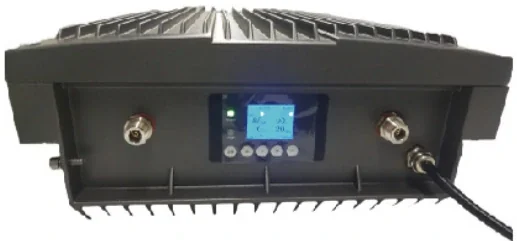
HAG-33DB3P Tri-Band Booster
Tri-band 33 dBm booster for multi-operator coverage.
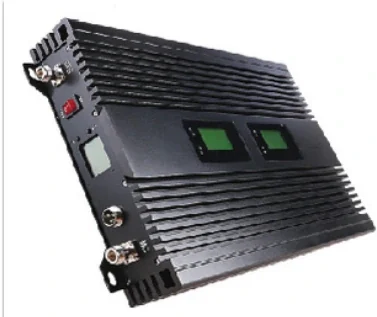
HAG-19-37T Dual-Band 4G Booster
Dual-band booster covering 1,000–5,000 m² for residential and commercial sites.
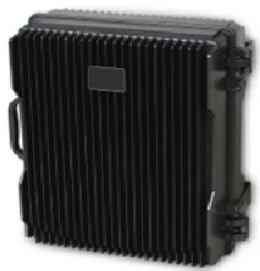
HAG-08-33 Dual-Band High-Power Booster
33–43 dBm dual-band booster covering up to 30,000 m².
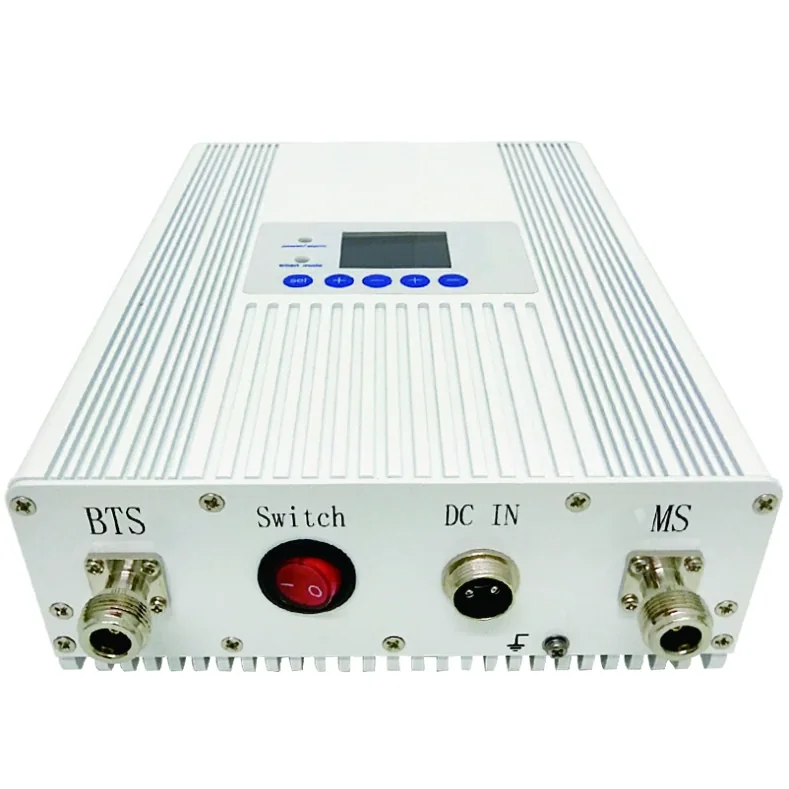
AL-30 Multi-Band LCD Signal Booster
Multi-band booster with LCD display, AGC and isolation detection for 100–3,000 m² coverage.