
Five Checks Before You Import Signal Boosters
A procurement checklist for importers: verify CE, FCC, RoHS and ISO 9001 scope, confirm band plans and datasheets, then lock labeling and after-sales terms.
On this page
A signal booster order can look simple on a quotation: model, power, quantity, price. The problems usually appear later, when the goods arrive and the certificate does not name the model, the nameplate shows a different band version, or the local network does not use the bands the unit was built for. None of these issues is solved by a lower unit price.
This checklist covers the five checks that prevent most import surprises: certification, band planning, datasheet quality, labeling and packaging, and after-sales terms. It is written for importers, distributors and project buyers who need to compare suppliers on the same basis.
What are the five checks before importing signal boosters?
The five checks are sequential. Certification without a matching band plan proves little, and a correct band plan without labeling control will still produce mismatched shipments. Work through them in order and keep the evidence for each one.
| Check | Question to answer | Document or evidence | Pass condition |
|---|---|---|---|
| 1. Certification | Does the certificate cover this product and market? | Certificate, test report, declaration | Model, standards and validity confirmed |
| 2. Band plan | Will the unit work on the target networks? | Band confirmation sheet, RF test report | UL and DL ranges match the survey |
| 3. Datasheet | Can the claimed performance be verified? | Model-specific datasheet | Per-band power, gain and bandwidth stated |
| 4. Label and packaging | Will the shipped goods match the order? | Nameplate drawing, packaging artwork | Band code and model traceable |
| 5. After-sales | What happens when a unit fails? | Warranty and RMA terms | Response, spare parts and costs defined |
Which certification documents should you request, and what do they prove?
Certification requirements depend on the destination market and the product type. CE is the conformity marking for the European Union; for radio equipment it is supported by a declaration of conformity and a technical file under the Radio Equipment Directive. FCC equipment authorization applies to the United States, and consumer signal boosters also face specific rules beyond general radio approval. RoHS restricts hazardous substances and is not an RF performance test. ISO 9001 certifies a factory’s quality management system, not an individual product.
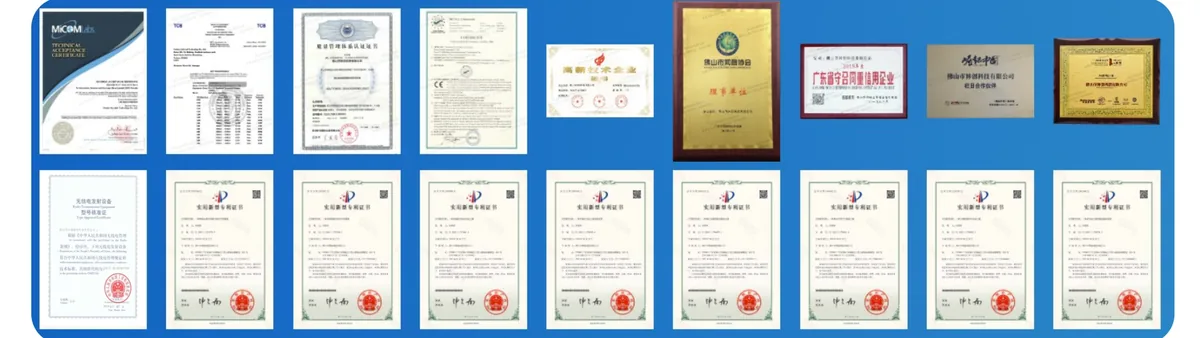
Ask for the certificate number, issuing laboratory, applicable model list and validity date. For a type-test report, check the tested bands and output power. A certificate that does not name your model, or names a different power version, may not cover what you are importing.
| Document to request | What it normally covers | What it does not prove |
|---|---|---|
| CE declaration and test reports | EU radio, EMC and safety requirements as applicable | That the unit works on a specific operator’s network |
| FCC equipment authorization | US radio and EMC requirements, plus applicable booster rules | Market access outside the United States |
| RoHS report or declaration | Restricted substances in the product | RF performance, reliability or safety |
| ISO 9001 certificate | Factory quality management system and scope | That a specific product model is certified |
| Local type approval | National radio equipment requirements | Operator permission or network compatibility |
A supplier may hold a valid certificate for a platform while the ordered variant uses a different band module or output stage. That is why the model list and the RF test report matter as much as the certificate itself.
How do you verify that a certificate covers your model?
Read the certificate as a technical document, not as a logo. Check the certificate holder, the manufacturer name, the factory address, the exact model or model family, the standards, the issue date and the expiry date. If the holder is a trading company rather than the manufacturer, ask for the authorization or the relationship between the two.
Where possible, verify the certificate number with the issuing laboratory or the relevant authority. Look for an accredited laboratory, and check whether the report includes the bands, bandwidth and output power you ordered. Blurry scans, certificates without a model list, expired documents and “certificates” issued by a consultancy without test data are all warning signs.
A practical test is to ask the supplier to point to the exact line in the certificate or report that covers your SKU. A supplier who cannot do that has not finished the verification, even if the certificate looks impressive.
How should you plan frequency bands before placing the order?
Do not assume that a booster sold in one country will work in another. Deployment differs between countries, operators and regions, and spectrum is refarmed over time. Confirm the deployed bands with the local operator or an RF engineer, and record the band number, uplink and downlink ranges and channel bandwidth in the order.
The RF test report should show performance on the exact bands you are buying, not only a generic 800–2700 MHz range. Ask for per-band output power, gain and bandwidth. If you distribute to several markets, keep the model names or SKU suffixes distinct so orders, manuals and spare parts do not get mixed. The band selection guide explains how single-, dual- and tri-band configurations differ in practice.
For weak-signal sites, the donor antenna and feeder are part of the band plan. A wideband log-periodic donor antenna may cover the required range, but the cable loss at the highest frequency still has to be calculated. If the distance is long, a fiber repeater such as the HAG-P5-37DB may be a better architecture than a long coaxial run.
What should a usable datasheet contain?
A datasheet is useful only if it lets you compare two products without guessing. Look for per-band values rather than a single headline number. “33 dBm” may mean total output, per-band output or a peak value; the difference matters when you size the antenna network.
| Field | What to look for | Common omission |
|---|---|---|
| Frequency bands | UL and DL range for each band | Only a generic MHz range |
| Output power | dBm per band, with tolerance | One figure for all bands |
| Gain | dB, with AGC/ALC range | Gain without control range |
| Bandwidth | MHz per band | Bandwidth not stated |
| Noise figure and spurious | dB and dBc limits | No receiver-impact data |
| Power supply | Voltage, current, consumption | No power budget |
| Connectors and impedance | N female, 50 Ω, torque | Connector type missing |
| Environment | IP rating, operating temperature | No indoor/outdoor rating |
Coverage claims in square metres are planning assumptions, not guarantees. They depend on ceiling height, wall materials, antenna count and the donor signal. A datasheet that states the assumption is more useful than one that only prints a large number.
What should you check on the nameplate, packaging and manual?
The nameplate is the traceable link between the order and the goods. It should show the model, the band configuration code, the output power, the serial number, the manufacturer, the electrical rating and any certification mark that actually applies. Confirm that the band code matches the purchase order, not just the model family.
Check the manual language, the accessory list and the carton markings. For private-label orders, approve the artwork before printing and keep a signed sample. Ask for pre-shipment photos of the nameplate, the label and the packaging. If the product is sold in a market that requires a local-language manual or importer address, confirm that the artwork includes it.
Packaging should protect the host, antennas and accessories during export. Confirm the inner packing, the drop-test standard used and the carton quantity. A cheap carton that fails in transit costs more than the price difference saved at the factory.
Which after-sales terms should be written into the purchase order?
Warranty promises in email are difficult to enforce. Put the key terms in the purchase order: warranty period, what is covered, what voids coverage, the DOA process, the RMA address, the response time and who pays the freight. For project orders, also agree on spare parts and technical support during installation.
| Term | What to specify | Why it matters |
|---|---|---|
| Warranty | Months, start date and covered parts | Avoids disputes after installation |
| DOA and RMA | Test evidence, return address, replacement lead time | Keeps a project on schedule |
| Spare parts | Antennas, power supplies, connectors | A missing part can stop commissioning |
| Technical support | Remote commissioning, response window | Buyers often install with local teams |
| Exclusions | Lightning, water, wrong power, unauthorized repair | Defines responsibility clearly |
| Traceability | Serial number list per carton | Helps isolate a faulty batch |
A supplier that supports remote commissioning can reduce the risk of a failed installation, especially for a first order in a new market. The same logic applies to spare antennas and power supplies: they are low-cost items that can prevent a much larger delay.
How do you turn the five checks into an order?
Send the supplier a package, not a sentence. Include the destination country, the operator and band plan, the required certification, the target quantity, the coverage area and the installation environment. Ask for a model-specific datasheet, a certificate with the model list, an RF test report for the ordered bands and a sample nameplate.
Then compare quotations on the same configuration. The AL-30 and HAG-08-33 sit at different points in the range, and a quotation is only comparable when the band plan, per-band power, accessories and warranty are stated. Our contact page explains how to submit a band plan and site data for review before you place the order.
Importing is a chain of evidence. The certificate proves the product was tested, the band plan proves it fits the network, the datasheet proves what it can do, the label proves what was shipped, and the after-sales terms prove what happens next. A supplier who can close all five links is easier to keep as a long-term partner.
Frequently asked questions
Is CE marking enough for every European country?
CE is the baseline conformity marking for the EU market, but some countries and operators add registration or acceptance requirements. Confirm the local market-access rules and whether a booster may be used on the target network before importing.
Can the factory issue a certificate in our brand name?
It depends on the certificate holder, the model list and the market rules. Some private-label projects need a new authorization or re-certification, while others can use a documented OEM relationship. Agree the path in writing before placing the order.
Does every model need its own certificate?
The certificate or test report must cover the model you are importing, either by exact model number or by a defined model family with the same RF design. A certificate for a different power or band version does not automatically cover your SKU.
How do we compare two quotations fairly?
Compare the same band plan, per-band output power, gain, antenna count, cable length, accessories, packaging and warranty. A lower price with fewer parts or a different band configuration is not the same product.
What is the usual lead time for a signal booster order?
Lead time depends on stock, customization, testing and quantity. Put the production schedule and the ship date in the purchase order, and ask for the pre-shipment inspection date rather than relying on a general estimate.
Can we import a booster without local type approval?
That depends on the destination market and how the product will be used. Radio equipment is regulated in most countries, and signal boosters may also require operator approval. Confirm the requirement with your importer or the local regulator before shipment.
Related products
See All Products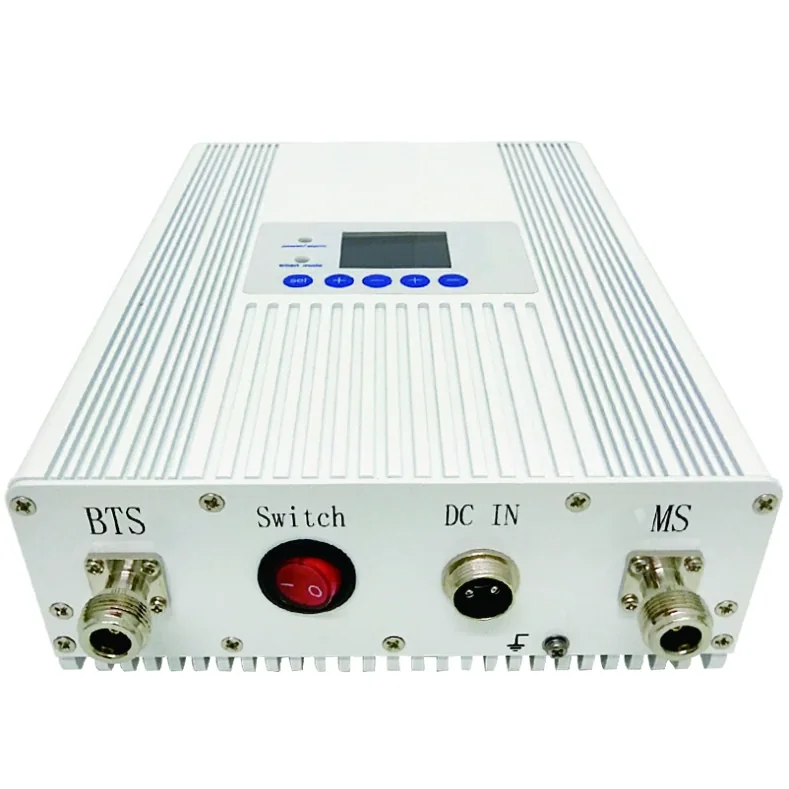
AL-30 Multi-Band LCD Signal Booster
Multi-band booster with LCD display, AGC and isolation detection for 100–3,000 m² coverage.
HAG-08-33 Dual-Band High-Power Booster
33–43 dBm dual-band booster covering up to 30,000 m².
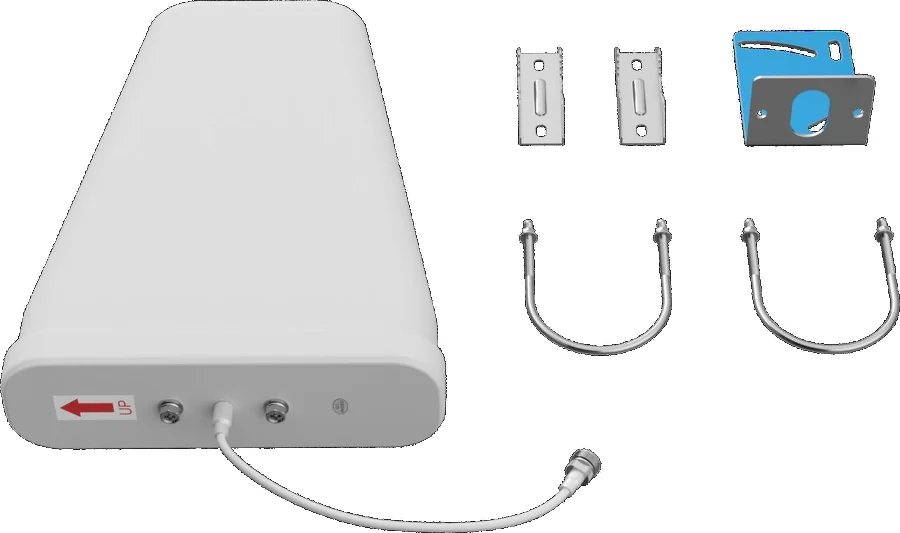
Wideband Log-Periodic Donor Antenna
10 dBi directional outdoor antenna for receiving donor signal.
View Details
HAG-P5-37DB Five-Band Fiber Repeater
Five-band fiber repeater with 90–95 dB gain for tunnels and large sites.