
6,200 m² Warehouse: Covering Long Aisles Under a Metal Roof
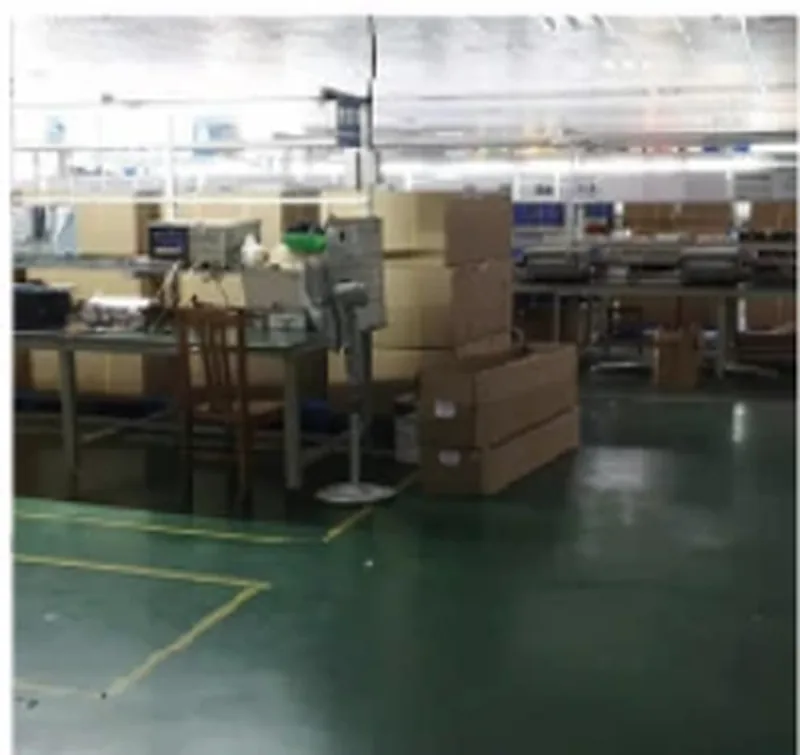
A high-ceiling warehouse with metal cladding had almost no indoor signal. The design focused on aisle coverage, donor height and cable loss.
How to read this case
Anonymized representative project profile. Figures are rounded planning values from a typical site, not a client testimonial or a performance guarantee.
Profile published October 2026
Country / city
Kenya / Nairobi
Building
Warehouse, 1 floor + mezzanine
Covered area
6,200 m²
Envelope
Metal cladding, 11 m ceiling
Operator
Safaricom, typical B1 / B3 / B7 / B20
Profile type
Deployed example
The constraint was the site, not the hardware
- Outdoor RSRP above the roofline was about −66 dBm, but indoor readings fell to −99 to −106 dBm.
- Metal cladding and long spans created deep shadow zones and strong reflections.
- The client needed coverage for handheld scanners and voice calls along the aisles, not just in offices.
- Cable runs were long, so cable loss had to be controlled to keep the service antenna power usable.
Representative aisle RSRP
Before
−103 dBm
After
−84 dBm
Measured 1.5 m above floor level
Representative test points: before and after
Representative test points with rounded values. Actual results vary with floor, walls, antenna position and operator load.
| Test point | Before RSRP | After RSRP | Before SINR | After SINR |
|---|---|---|---|---|
| Roof donor referenceAbove the metal roof, clear line to the macro site | −66 dBm | −66 dBm | 10 dB | 10 dB |
| Main aisle, centre | −106 dBm | −88 dBm | −1 dB | 11 dB |
| Racking aisle, far end | −103 dBm | −84 dBm | 0 dB | 14 dB |
| Loading dock | −99 dBm | −83 dBm | 2 dB | 16 dB |
| Mezzanine office | −101 dBm | −85 dBm | 1 dB | 15 dB |
What changed
- Main aisles, loading dock and mezzanine office measured −83 to −89 dBm, with SINR of 11–16 dB.
- Handheld scanners and voice calls worked along the tested routes.
- The far corners behind dense racking remained weaker and were marked for a future antenna extension.
Engineering takeaways
- Metal cladding behaves like a shield. The donor antenna must be outside and above the roofline where the macro signal is cleaner.
- In high-ceiling warehouses, antenna height and aisle alignment matter more than simply adding power.
- Long cable runs add loss. Use low-loss cable and keep the host as close as practical to the antenna distribution point.
Configuration used in this profile
Related solution
Warehouses
Hosts that can serve as a starting point
Final model and bands are confirmed against site measurements, operator and coverage target.
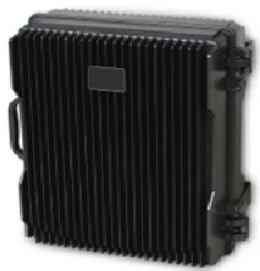
HAG-08-33 Dual-Band High-Power Booster
33–43 dBm dual-band booster covering up to 30,000 m².
HAG-P5-37DB Five-Band Fiber Repeater
Five-band fiber repeater with 90–95 dB gain for tunnels and large sites.
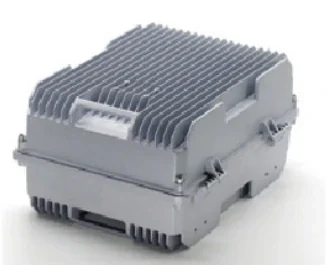
HAG-D5-37 Long-Range Dual-Band Booster
37–43 dBm dual-band booster covering 3,000–15,000 m².
Can one host cover a 6,200 m² warehouse?
In this profile, yes, using one high-power dual-band host and 14 antennas. The result depends on ceiling height, racking layout, cable loss and the target data rate. A floor plan is required for a reliable design.
Why not use a standard low-power booster?
The covered area and cable runs were too large for a low-power host. A high-power host reduces the number of amplifiers and keeps the antenna feed power usable.
Can the system cover the outdoor yard?
Outdoor coverage is a separate design and may require directional antennas and coordination with the operator. It was not included in this indoor project.
Send us your site data
Download the survey pack, record outdoor RSRP, indoor test points, building envelope and photos, then send it for a first review.