
9-Floor Hotel: From No Data in Guest Rooms to Usable 4G
A 3,800 m² hotel with a concrete frame and Low-E glass. Outdoor signal was usable on the roof, but guest rooms on floors 2–8 had almost no data service.
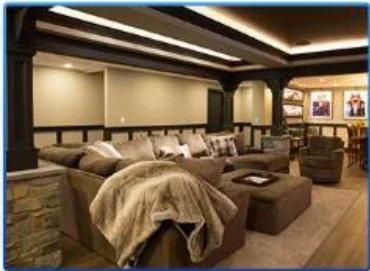
How to read this case
Anonymized representative project profile. Figures are rounded planning values from a typical site, not a client testimonial or a performance guarantee.
Profile published October 2026
Country / city
Nigeria / Lagos
Building
Hotel, 9 floors
Covered area
3,800 m²
Envelope
Reinforced concrete + Low-E glass
Operator
MTN Nigeria, typical B1 / B3 / B7
Profile type
Deployed example
The constraint was the site, not the hardware
- Outdoor RSRP at the roof donor position was about −71 dBm, but indoor RSRP in guest rooms dropped to −105 to −112 dBm.
- Low-E coated glass and the concrete core added high penetration loss, especially on the lower floors.
- The hotel needed usable voice and data in guest rooms without installing equipment inside every room.
- The design had to keep donor and service antennas separated to avoid self-oscillation.
Representative guest-floor RSRP
Before
−108 dBm
After
−84 dBm
Measured at seated height near the window
Representative test points: before and after
Representative test points with rounded values. Actual results vary with floor, walls, antenna position and operator load.
| Test point | Before RSRP | After RSRP | Before SINR | After SINR |
|---|---|---|---|---|
| Roof donor referenceDonor antenna position; not an indoor service point | −71 dBm | −71 dBm | 8 dB | 8 dB |
| Floor 2 guest room | −108 dBm | −84 dBm | 0–2 dB | 14 dB |
| Floor 5 corridor | −110 dBm | −86 dBm | 0–1 dB | 12 dB |
| Floor 8 guest room | −105 dBm | −83 dBm | 2–3 dB | 16 dB |
| Ground-floor lobby | −98 dBm | −80 dBm | 4 dB | 18 dB |
What changed
- All tested guest floors measured −82 to −88 dBm RSRP after commissioning, with SINR of 12–18 dB.
- Voice calls and mobile data were usable in guest rooms, corridors and the lobby.
- The basement and back-of-house areas were not included; they require a separate antenna layout.
Engineering takeaways
- Measure floor by floor. A good roof reading does not prove that lower floors will be easy to cover.
- Low-E glass can add 20–30 dB of loss compared with plain glass. Plan antenna density accordingly.
- Keep service antennas at least 8–10 m from the donor antenna with walls in between where possible.
Configuration used in this profile
Related solution
Hotels & Resorts
Hosts that can serve as a starting point
Final model and bands are confirmed against site measurements, operator and coverage target.
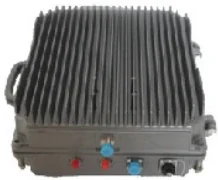
HAG-P5-37DB Five-Band Fiber Repeater
Five-band fiber repeater with 90–95 dB gain for tunnels and large sites.
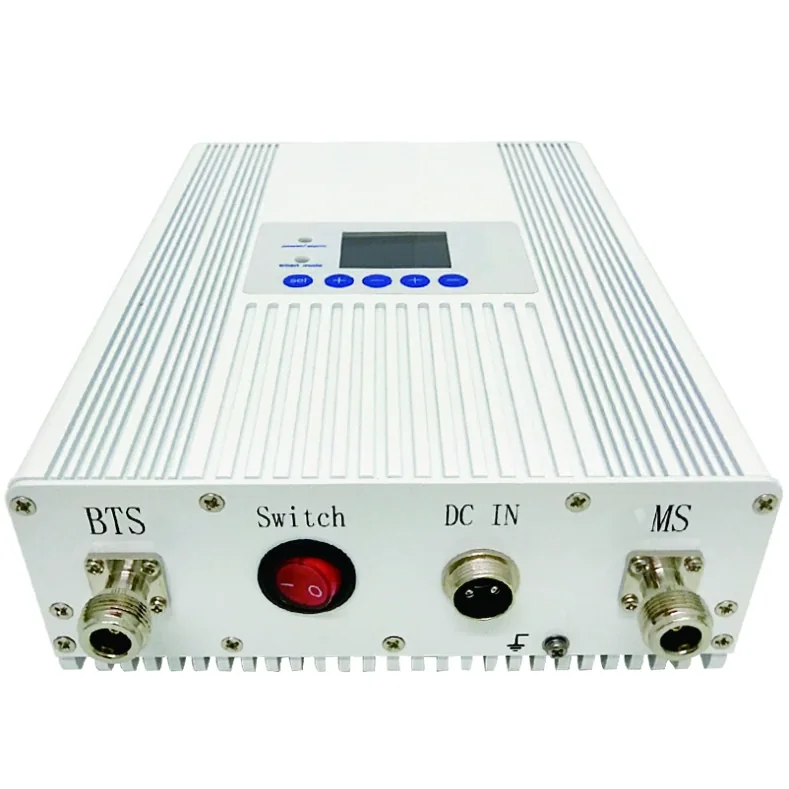
AL-30 Multi-Band LCD Signal Booster
Multi-band booster with LCD display, AGC and isolation detection for 100–3,000 m² coverage.
HAG-33DB5P Five-Band Booster
Five-band 33 dBm booster for commercial and industrial sites.
Can one system cover all nine floors?
In this profile, one host with 12 service antennas covered the tested guest floors. The antenna count, cable loss and output power must be confirmed against the floor plan and target RSRP.
Does Low-E glass make a booster useless?
No, but it increases indoor loss. The donor antenna must be outside, and more service antennas may be needed. A site measurement is the only reliable way to size the system.
Can the system support more than one operator?
The host bands are configurable, but one host is normally configured for a specific band set. Multi-operator coverage may require additional hosts or filtering. Send the operator list before quotation.
Send us your site data
Download the survey pack, record outdoor RSRP, indoor test points, building envelope and photos, then send it for a first review.